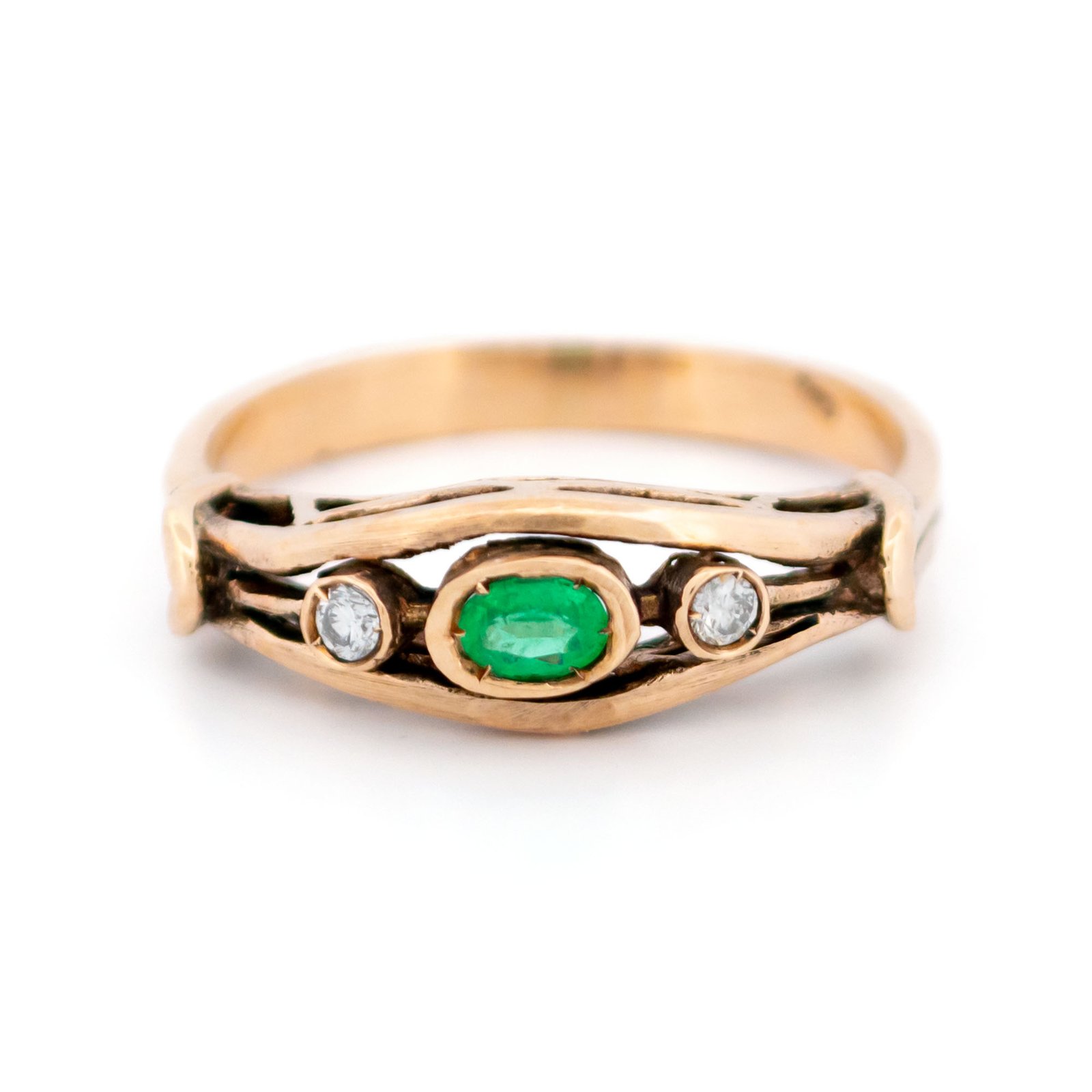
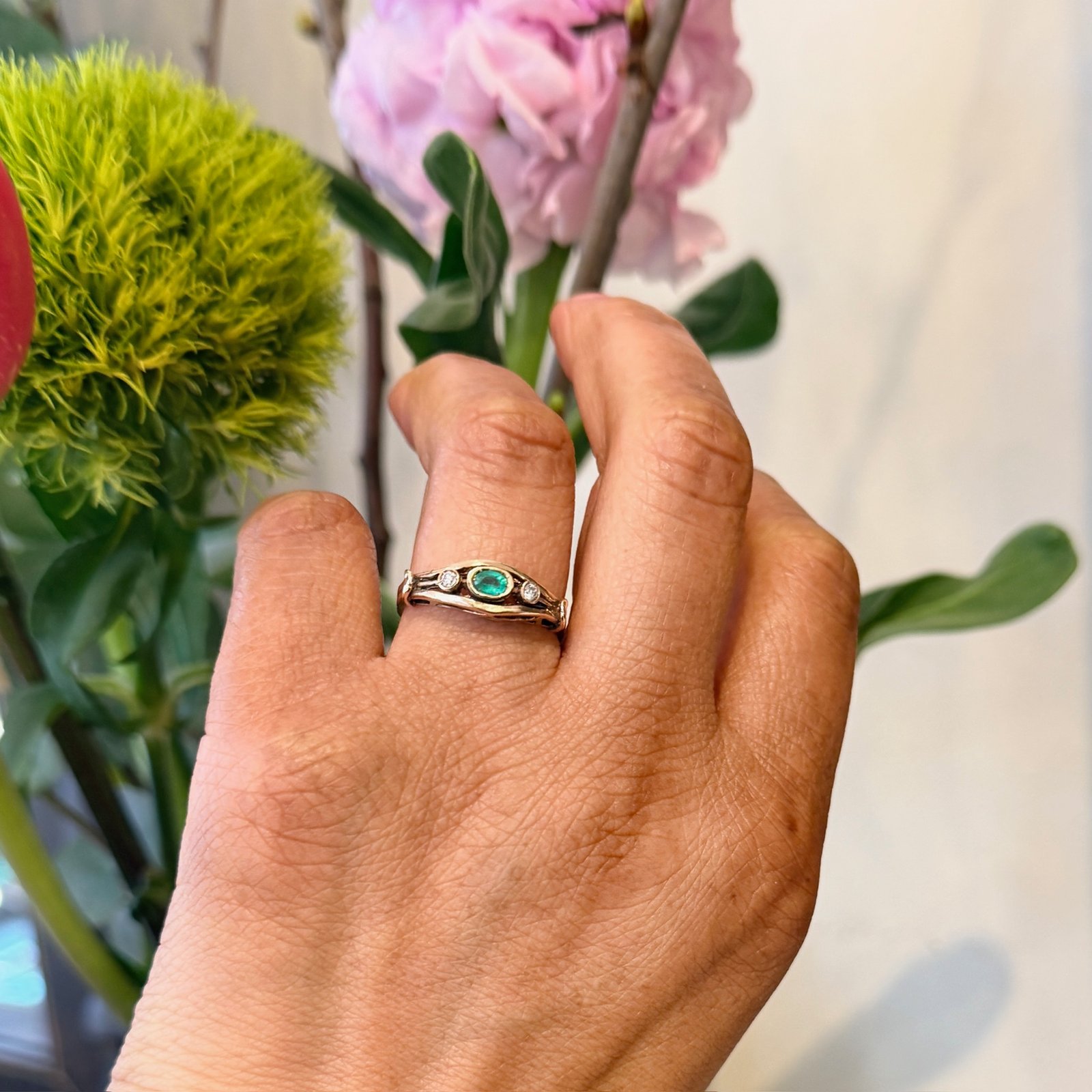
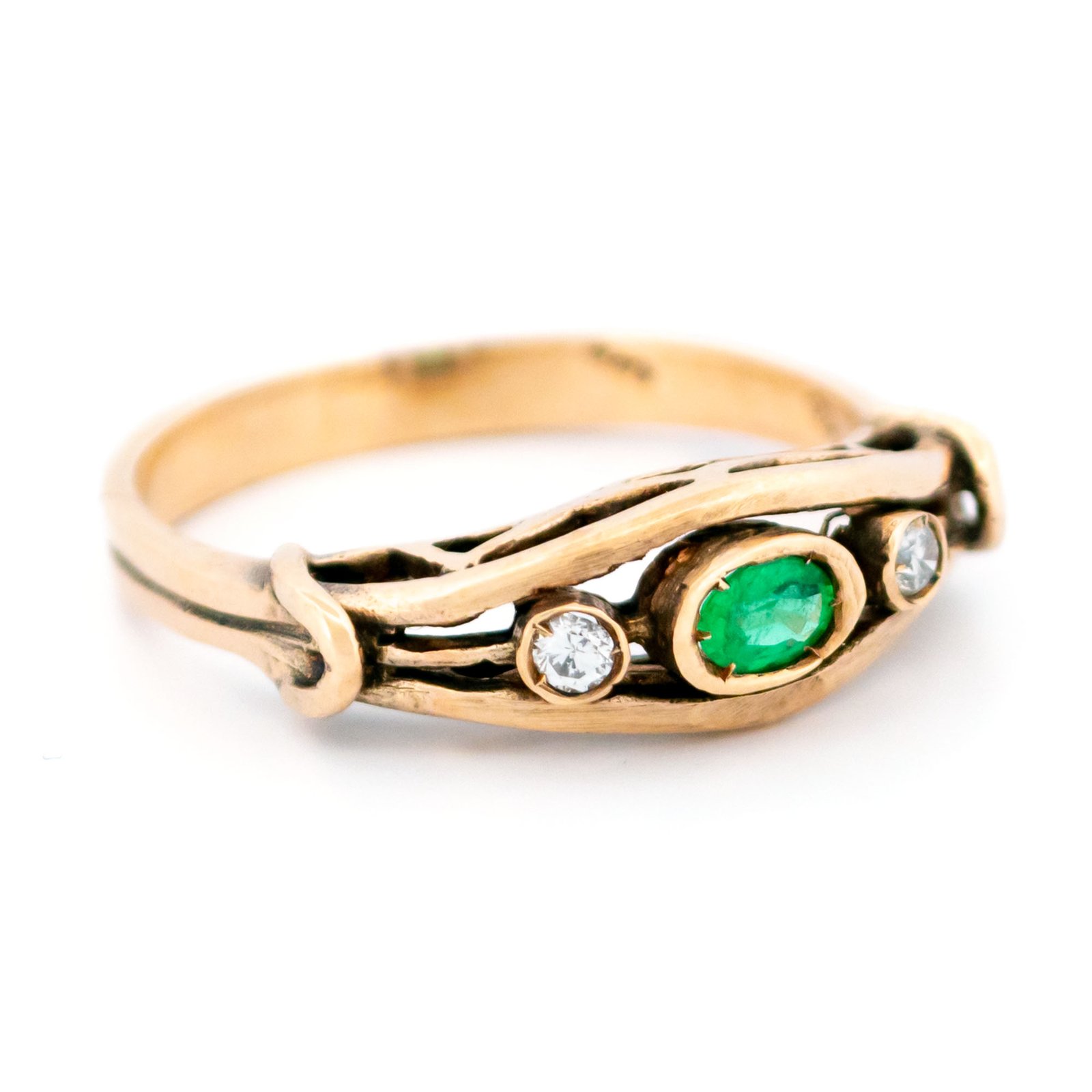
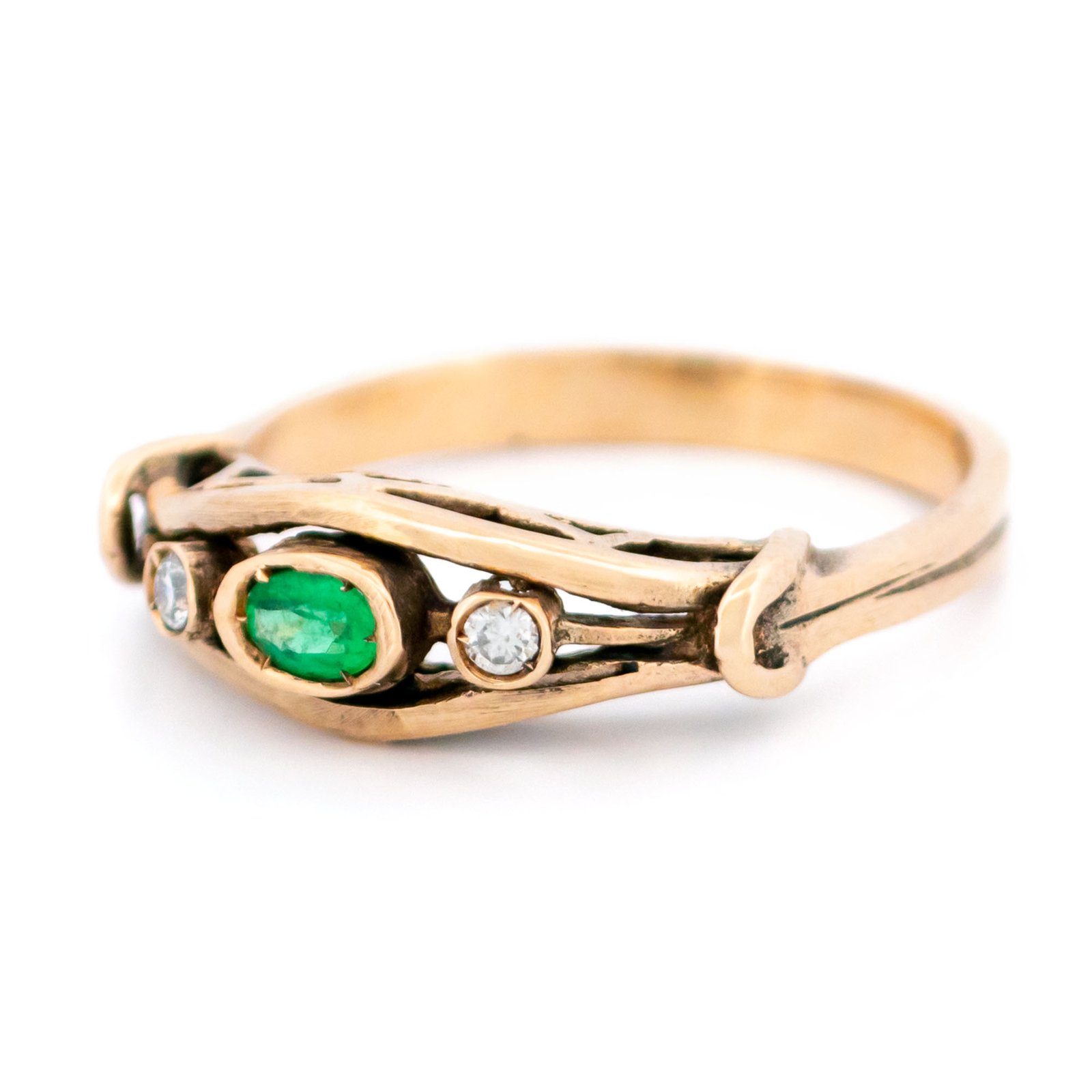
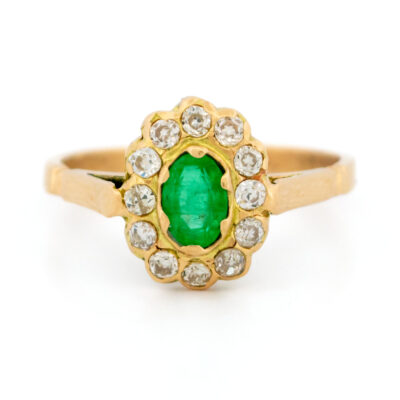
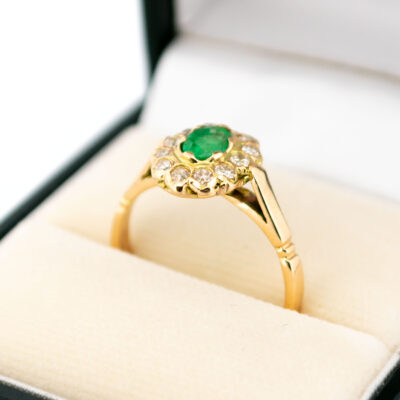
A graceful Art Deco–inspired trilogy ring crafted in warm 9k yellow gold. At its center glows a vivid oval emerald (approx. 0.26ct), framed by two brilliant-cut diamonds totaling approx. 0.08ct (H SI1). The openwork gallery and flowing lines add lightness and vintage character, while the soft green gemstone creates a fresh, elegant sparkle. 💚

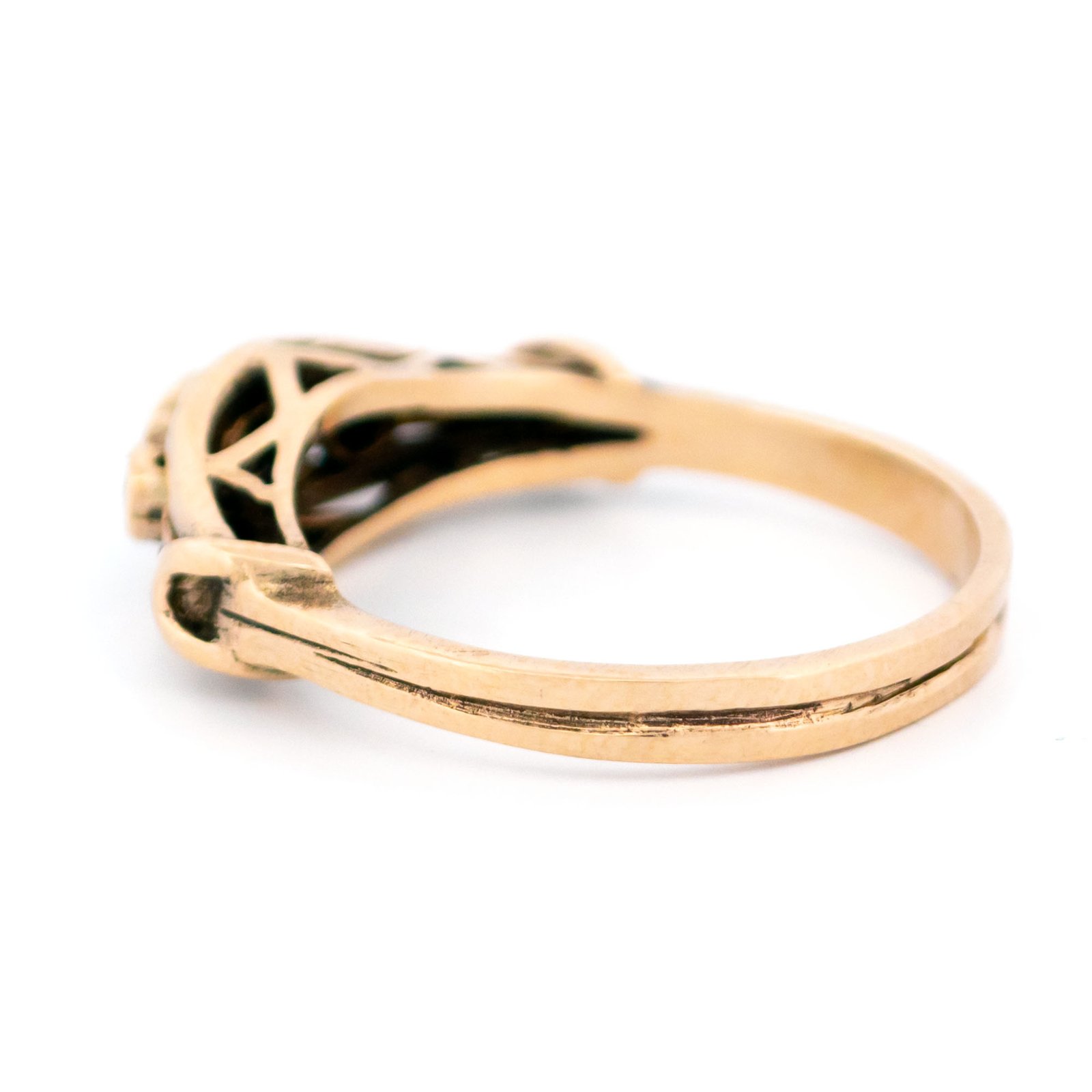
Diamond Emerald 9k Trilogy Ring 18630-9601
€ 1.195,00 VAT incl. (where applicable)
In stock
Videos
A graceful Art Deco–inspired trilogy ring crafted in warm 9k yellow gold. At its center glows a vivid oval emerald (approx. 0.26ct), framed by two brilliant-cut diamonds totaling approx. 0.08ct (H SI1). The openwork gallery and flowing lines add lightness and vintage character, while the soft green gemstone creates a fresh, elegant sparkle. 💚
Details: ±0.26ct Emerald, ±0.08ct (H SI1) Brilliant-cut diamonds, 9k Ring
Size: 18.25 NL / 57.5 FR / 8¼ US / Q UK, sizeable (within reason).
Weight in grams: 2.9.
Condition: As new – unused.
| Design Era | |
|---|---|
| Design & Historical Context | Art Deco jewelry, also known as Jazz Age jewelry, became popular in the 1920s and remained in style through the 1930s. It was named after the Exposition International des Arts Décoratifs et Industriels Modernes, a exhibition held in Paris in 1925 that was largely dedicated to the jewelry arts. This style was inspired by a variety of cultural and artistic movements, such as Oriental, African, and South American art, as well as Cubism and Fauvism. Art Deco jewelry is known for its sharp, straight lines and emphasis on modernity and the machine age. During the Art Deco era, there were significant improvements in diamond cutting techniques, which made diamonds more radiant and sparkling than ever before. This, along with increased prosperity, allowed more people to afford diamond jewelry and engagement rings. Additionally, new casting techniques made it possible to produce more intricate and detailed settings. Art Deco jewelry was not only fashionable but also reflected the social and cultural changes of the time. The bold, modern design of Art Deco jewelry reflected the liberation and empowerment of women during the 1920s and 1930s. Today, Art Deco jewelry is highly sought after by collectors and is often featured in museum exhibitions and high-end auctions. |
| Key Materials | |
| Materials & Craftsmanship | Emerald: The Jewel of Renewal and Prosperity Emerald, with its vibrant green hue, is one of the most prized gemstones in the world, belonging to the beryl family. Its captivating color, ranging from deep forest green to bright spring green, is due to the presence of chromium and vanadium during its formation. Emeralds have been cherished throughout history, from ancient Egyptian pharaohs who believed the stone symbolized eternal youth, to Incan and Aztec civilizations that revered it as a holy stone. In the Renaissance period, emeralds were thought to possess the power to predict the future and reveal truth. In modern jewelry, emeralds are admired for their rich color and elegance. Although they are slightly softer than other precious stones, with a Mohs hardness of 7.5 to 8, their beauty and rarity make them a popular choice for rings, necklaces, and earrings. Emeralds often feature characteristic inclusions, known as "jardin," which add to their uniqueness and charm. Emeralds symbolize renewal, growth, and prosperity, making them a timeless and meaningful choice for jewelry that exudes sophistication and natural beauty. Brilliant-cut diamond: The Pinnacle of Sparkle and Brilliance The brilliant-cut diamond is the most popular and widely recognized diamond cut in the world, renowned for its exceptional sparkle and fire. This cut, perfected over centuries, is designed to maximize the reflection of light, creating the dazzling brilliance that has made it the standard for diamonds in modern jewelry. The brilliant cut features 58 facets—33 on the crown and 25 on the pavilion—carefully arranged to capture and reflect light from every angle. The precision of these facets ensures that light entering the diamond is reflected internally and dispersed into a stunning array of colors, giving the stone its characteristic brilliance. Historically, the brilliant cut evolved from earlier cuts like the Old European and rose cuts, with advancements in diamond cutting technology and understanding of light reflection. This modern cut became widely adopted in the early 20th century and quickly became the preferred choice for engagement rings and other fine jewelry, due to its unmatched sparkle. In modern jewelry, brilliant-cut diamonds are prized for their versatility and unmatched brilliance. They are the go-to choice for engagement rings, earrings, pendants, and virtually any jewelry piece where a classic, sparkling diamond is desired. The round shape and symmetrical design make the brilliant cut ideal for showcasing the inherent beauty of the diamond, regardless of its size. A brilliant-cut diamond is more than just a gemstone; it is a symbol of timeless beauty and perfection. Its unparalleled sparkle and universal appeal make it the quintessential choice for jewelry that celebrates life's most precious moments. 9k: The Affordable and Durable Choice with a Subtle Golden Hue 9k gold is a cost-effective and sturdy option in the world of fine jewelry, particularly popular for those seeking the look of gold at a more accessible price point. The "9k" indicates that the gold is composed of 37.5% pure gold, with the remaining 62.5% made up of alloyed metals such as copper, silver, nickel, or zinc. This higher proportion of alloyed metals results in a more durable and harder material, making 9k gold an excellent choice for everyday wear. Historically, 9k gold has been favored in regions like the United Kingdom and Australia, where it is legally recognized as gold. It offers a balance between the luxury of gold and the practicality of more affordable metals, making it accessible to a wider range of people. In modern jewelry, 9k gold is appreciated for its durability and subtle color. While its gold content is lower than that of 14k or 18k gold, it still retains a warm, golden hue, though it is slightly paler. The color of 9k gold can vary depending on the metals used in the alloy: Yellow Gold: 9k yellow gold has a softer, more subdued golden color compared to higher karat golds, but it still carries the classic warmth and appeal of gold. White Gold: 9k white gold has a faint golden tint beneath its white finish, which is often enhanced with a rhodium plating to give it a brighter, more silvery appearance. Rose Gold: 9k rose gold, made by adding more copper to the alloy, has a delicate pinkish hue that is slightly more muted than higher karat rose golds but still carries a romantic charm. 9k gold is commonly used in rings, earrings, bracelets, pendants, and other jewelry that is designed for daily wear. Its increased durability means it is less prone to scratching and bending, making it a practical choice for pieces that are worn regularly. 9k gold is more than just an affordable alternative; it is a symbol of practical luxury and everyday elegance. Its durability, combined with its subtle and warm color, makes 9k gold a popular choice for those who want the beauty of gold with the added benefit of strength and affordability. Whether in a simple design or an intricate piece, 9k gold offers a lasting and attractive option for jewelry that can be cherished daily. |
| Size | |
| Weight (in grams) | 2.9 |
| Condition |
Enhance the Beauty of Your Jewelry with Proper Care
Wearing your jewelry is a special way to express yourself and add a touch of personal style to any look. However, to ensure your jewelry remains in pristine condition, there are a few simple steps you need to take to keep it looking its best.
General Care Instructions:
Remove jewelry when showering or bathing, especially when at the beach, in the sea or in chlorinated water.
Avoid wearing jewelry while doing physical work such as housekeeping, gardening or exercise.
Storing your jewelry in a dry and cool place will help protect it from moisture, dirt and dust.
Keeping it away from harsh chemicals such as bleach, ammonia and chlorine will help to avoid discoloration and damage.
Cleaning your jewelry regularly with a soft cloth will help to keep it looking shiny and new.
Avoid exposing your jewelry to extreme temperatures, such as leaving it in direct sunlight or near a heater, as this can cause damage.
Handle your jewelry carefully and avoid dropping it, as this can cause the stones to loosen or the metals to scratch.
Finally, if possible, have your jewelry professionally checked and serviced. This will ensure that any potential problems are spotted and fixed before they become worse.
By following these tips, you can enjoy your precious jewelry for many years to come.
Related Products
-
Diamond Emerald 18k Trilogy Ring 17997-5230
€ 3.295,00 VAT incl. (where applicable) -
Emerald Diamond 14k Trilogy Ring 13709-8213
€ 2.995,00 VAT incl. (where applicable) -
Emerald Diamond 18k Trilogy Ring 15733-5207
€ 3.295,00 VAT incl. (where applicable) -
Diamond Emerald 14k Cluster Ring 17786-7125
€ 2.695,00 VAT incl. (where applicable) -
Diamond 14k Trilogy Ring 16902-9008
€ 1.695,00 VAT incl. (where applicable) -
Diamond Emerald 18k Platinum Marquise-Shape Ring 16247-8771
€ 3.895,00 VAT incl. (where applicable) -
Diamond Emerald 14k Row Ring 13199-5073
€ 1.495,00 VAT incl. (where applicable) -
Diamond Sapphire 18k Trilogy Ring 10615-6244
€ 1.495,00 VAT incl. (where applicable)




Updating…
Log in
×