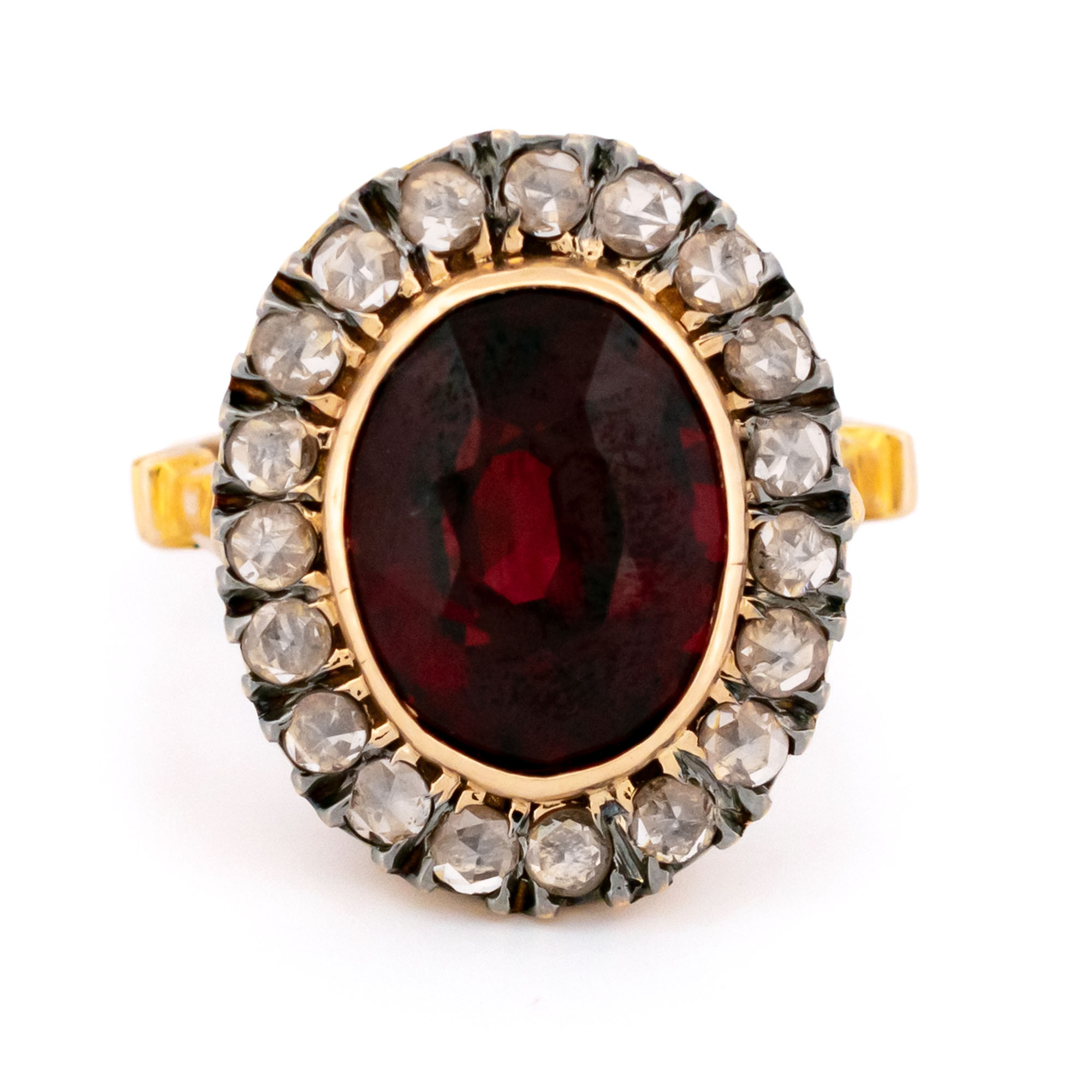
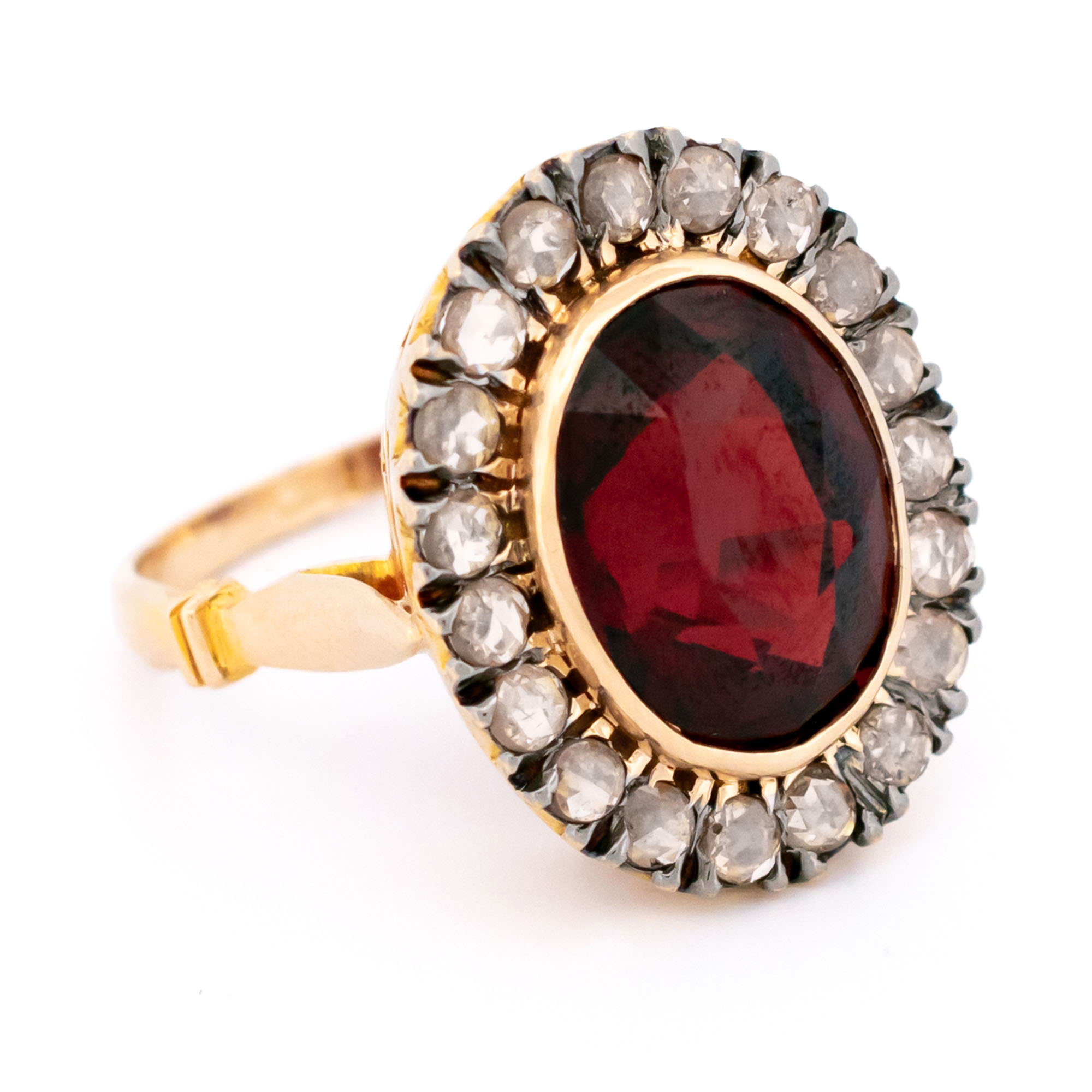
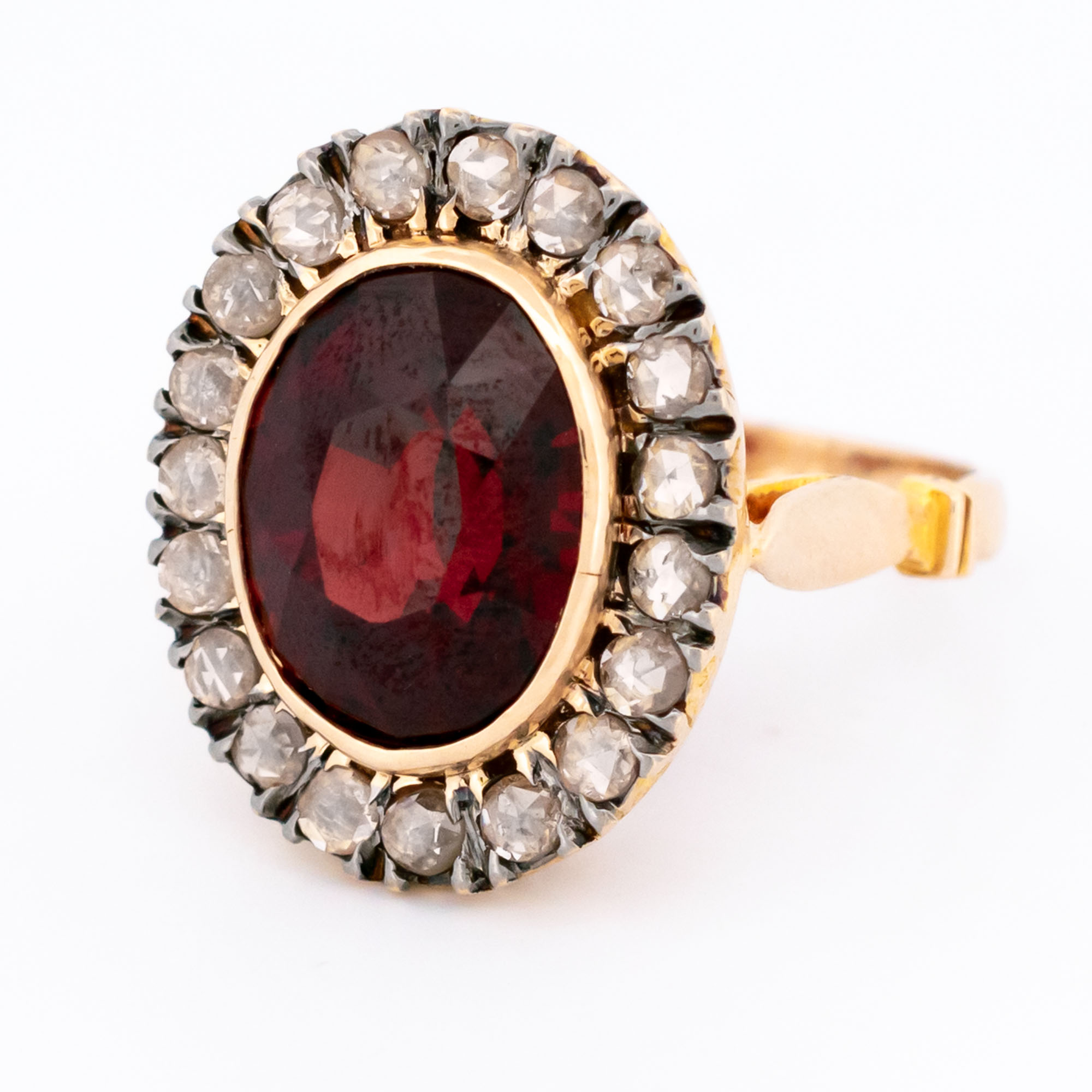
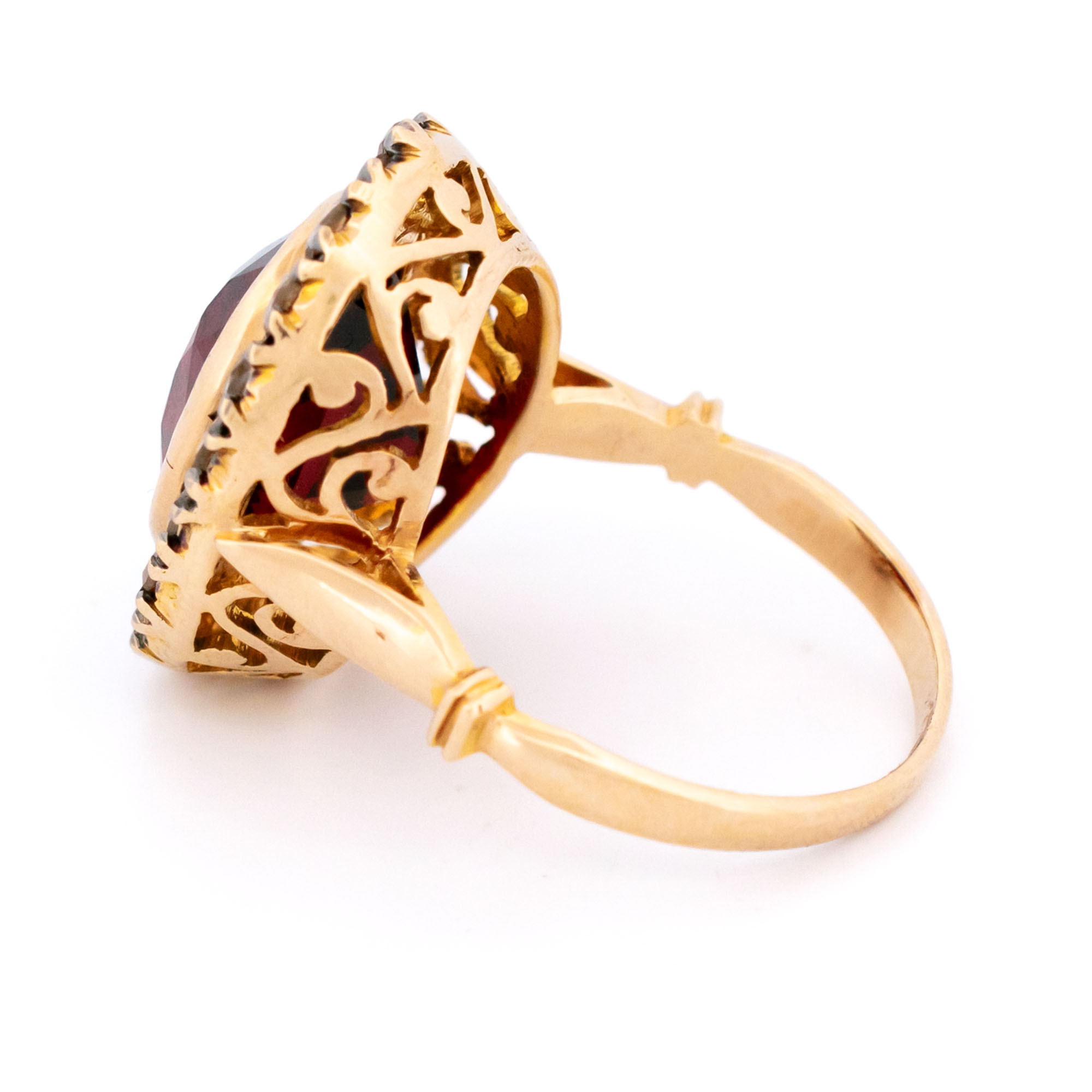
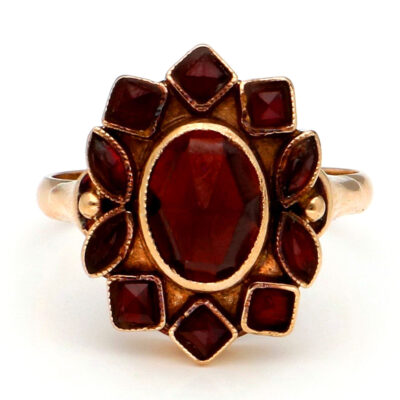
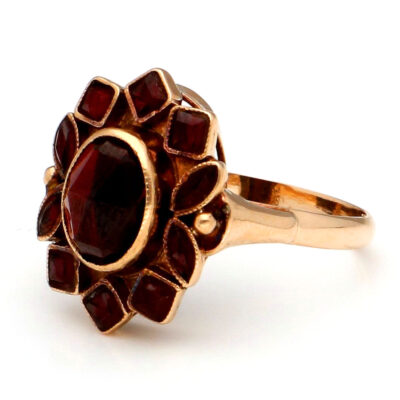
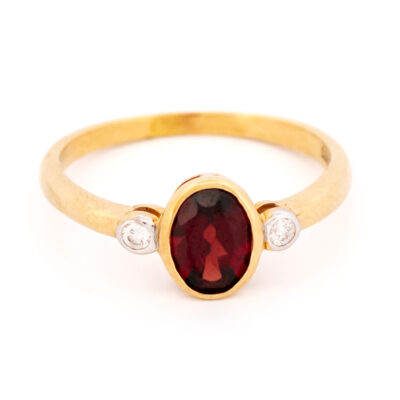
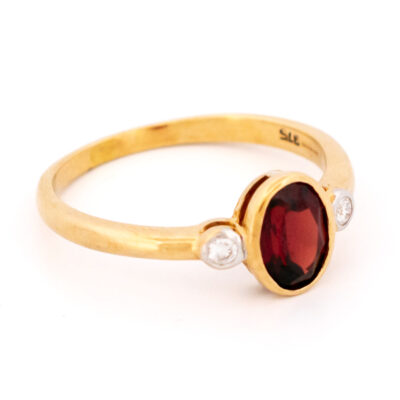
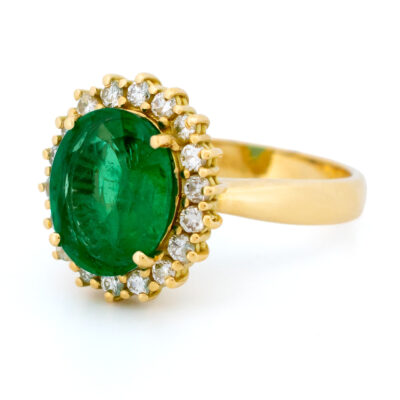
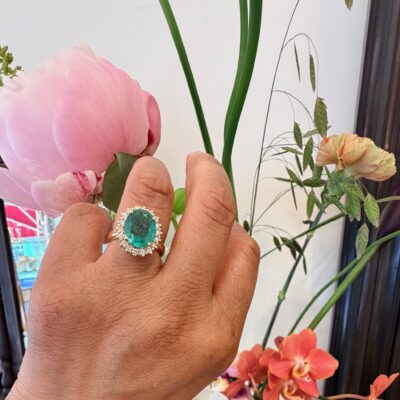
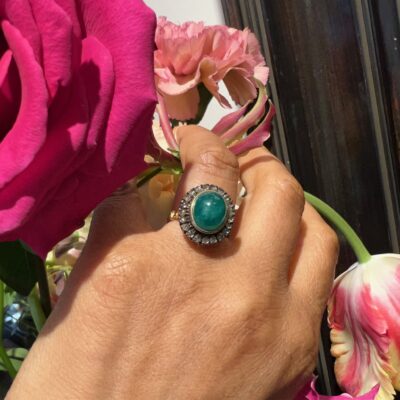
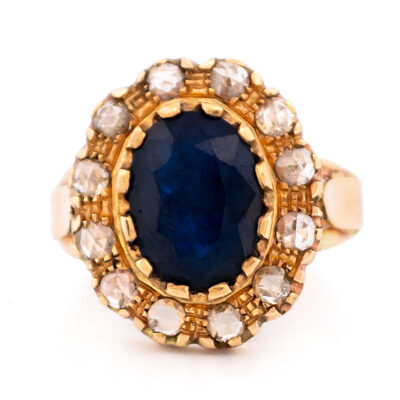
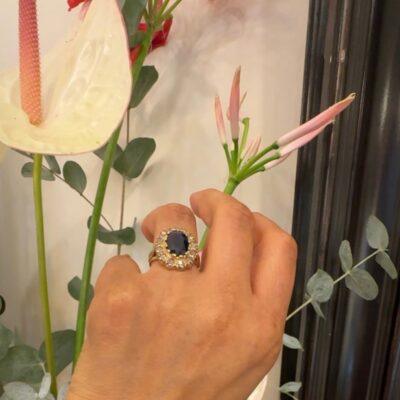
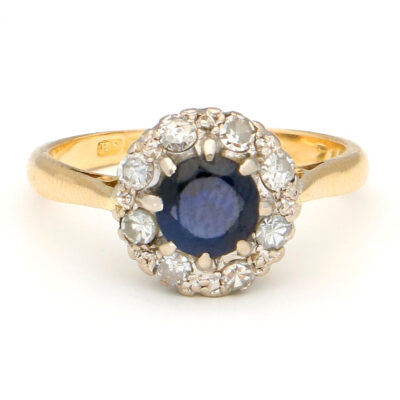
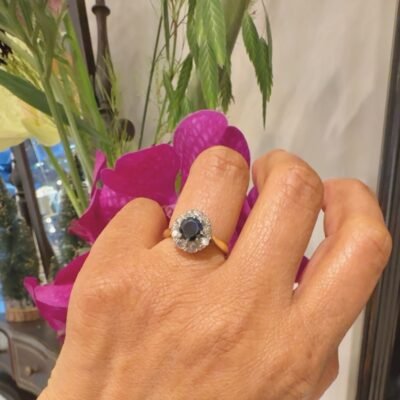
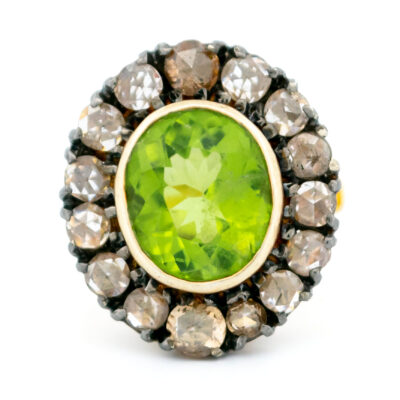
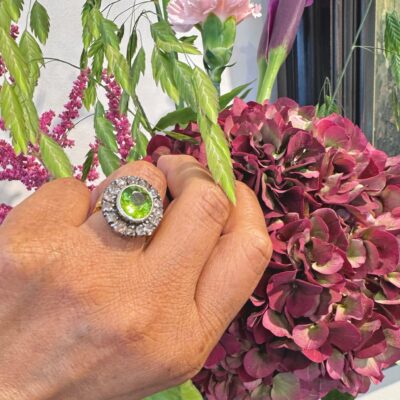
This striking Victorian-style cluster ring showcases an impressive approximately 8.90ct garnet, glowing in rich wine-red hues. A halo of approximately 1.00ct rose-cut diamonds surrounds the centre stone, creating a soft, romantic sparkle against the warm 14k gold setting. ❤️ A timeless statement piece with exceptional antique charm.

14k Diamond Garnet Cluster Ring 19179-9741
€ 3.295,00 VAT incl. (where applicable)
In stock
This striking Victorian-style cluster ring showcases an impressive approximately 8.90ct garnet, glowing in rich wine-red hues. A halo of approximately 1.00ct rose-cut diamonds surrounds the centre stone, creating a soft, romantic sparkle against the warm 14k gold setting. ❤️ A timeless statement piece with exceptional antique charm.
Details: ±8.90ct Garnet, ±1.00ct Rose-cut diamonds, 14k, Ring
Size: 18.25 NL / 57.0 FR / 8 US / P½ UK, sizeable (within reason).
Weight in grams: 7.3.
Condition: Excellent condition – barely used with minimal signs of wear.
| Design Era | |
|---|---|
| Design & Historical Context | The Victorian Era spanned Queen Victoria's rule of England from 1837 until 1901. During this time, a middle class began to emerge, sparking a demand for jewelry in the mass market, jewelry trends often reflected the tone of current events. The era is usually divided into several subsections: the Romantic Period from 1837 to 1861, the Grand Period from 1861 to 1880, and the Aesthetic Period from 1880 to 1901. During the Romantic Period jewelry also featured nature-inspired designs, similar to jewelry of the Georgian era. Frequently, these designs were delicately and intricately etched into gold. Lockets and brooches were popular in daytime jewelry during the early Victorian era, whereas colored gemstones and diamonds were worn during the evening. During the Grand Period jewelry , because the Grand or Mid-Victorian era corresponded with the death of Queen Victoria's husband, many jewelry pieces have solemn, somber designs. Known as mourning jewelry, the pieces feature heavy, dark stones. Jet, onyx, amethyst, and garnet are frequently found in jewelry from this period. Compared to previous periods, Mid-Victorian-era jewelry features highly creative, colorful designs using shells, mosaics and gemstones. During the Aesthetic period, jewelers used diamonds and feminine, bright gemstones such as sapphire, peridot, and spinel. Star and crescent designs as well as elaborate hat pins were also popular. Some scholars believe the aesthetic era began sooner, in 1875, and ended as early as 1890. |
| Key Materials | |
| Materials & Craftsmanship | Garnet: The Stone of Passion and Protection Garnet, renowned for its deep red hue, is a gemstone that symbolizes passion, energy, and protection. Though commonly associated with its rich red color, garnet actually comes in a variety of shades, including green, orange, and even rare blue, making it a versatile and intriguing gemstone. Garnet has a long history of use, dating back to ancient Egypt, where it was worn by pharaohs as a symbol of life and power. In Roman times, garnets were often set into signet rings used to stamp wax seals on important documents. The stone was also believed to offer protection to travelers and warriors, warding off harm and ensuring safe journeys. In jewelry, garnet’s durability, with a Mohs hardness of 6.5 to 7.5, and its striking color make it a popular choice for rings, necklaces, and earrings. Its ability to capture and reflect light with a warm, fiery glow adds a touch of drama and sophistication to any piece. Garnet is more than just a gemstone; it is a symbol of enduring passion and strength. Its vibrant energy and historical significance make it a timeless and powerful choice for jewelry that stands out and tells a story. Rose-cut diamond: The Vintage Gem of Romance and Light Rose-cut diamonds are a beautiful and romantic choice in the world of jewelry, known for their distinctive dome-shaped appearance and soft, glowing sparkle. This antique diamond cut, dating back to the 16th century, features a flat bottom and a domed top covered in triangular facets that resemble the petals of a rosebud—hence the name. Historically, rose-cut diamonds were highly prized during the Georgian and Victorian eras, often used in jewelry pieces meant to be worn in candlelight, where their gentle sparkle added a warm, intimate glow. Unlike modern brilliant cuts, which are designed for maximum fire and brilliance, rose-cut diamonds offer a more subdued, yet enchanting, reflection of light. In modern jewelry, rose-cut diamonds are cherished for their vintage appeal and unique charm. Their flat base and shallow profile make them perfect for creating low-profile, elegant designs that sit close to the skin, such as in rings, pendants, and earrings. Rose-cut diamonds are often used in vintage-inspired and bespoke pieces, where their historical elegance adds a touch of timeless romance. Rose-cut diamonds are more than just a gemstone choice; they are a symbol of understated beauty and classic romance. Their soft, luminous sparkle and antique allure make them an ideal choice for jewelry that tells a story and captures the essence of a bygone era. 14k: The Durable Choice for Everyday Elegance 14k gold is a popular and practical choice in fine jewelry, known for its durability, affordability, and beautiful color. The "14k" signifies that the gold is composed of 58.3% pure gold and 41.7% alloyed metals, such as copper, silver, nickel, or zinc. This combination results in a strong and resilient material that can withstand the rigors of daily wear, making it an ideal option for those seeking both beauty and durability. Historically, gold has always been a symbol of wealth and luxury, and 14k gold strikes a perfect balance between the rich appearance of gold and the strength needed for everyday use. Because of its lower gold content compared to 18k or 24k gold, 14k gold is more affordable, making it a popular choice for a wide range of jewelry pieces. In modern jewelry, 14k gold is appreciated for its versatility and variety. It is available in several colors, each achieved by mixing gold with different metals: Yellow Gold: A classic and timeless choice, 14k yellow gold has a warm, golden hue that complements most skin tones and is well-suited for both modern and traditional designs. White Gold: Created by alloying gold with white metals like nickel or palladium, 14k white gold has a sleek, silver-like appearance. It is often rhodium-plated for added shine and is a popular choice for engagement rings and other contemporary jewelry. Rose Gold: Achieved by mixing gold with copper, 14k rose gold has a soft, pinkish hue that has gained popularity for its romantic and vintage appeal. It is a favorite for those seeking a unique and stylish alternative to traditional gold colors. 14k gold is commonly used in a wide array of jewelry, including rings, necklaces, bracelets, earrings, and watches. Its durability makes it especially suitable for pieces that are worn daily, such as wedding bands and engagement rings, where the balance between strength and beauty is crucial. 14k gold is more than just a practical choice; it is a symbol of enduring style and everyday luxury. Its ability to retain the look of gold while offering greater resistance to scratches and dents makes 14k gold a versatile and timeless option for any jewelry collection. Whether in a simple band or an elaborate design, 14k gold offers a perfect blend of elegance and durability that can be enjoyed for years to come. |
| Size | |
| Gender | |
| Weight (in grams) | 7.3 |
| Condition | Excellent condition – barely used with minimal signs of wear |
Enhance the Beauty of Your Jewelry with Proper Care
Wearing your jewelry is a special way to express yourself and add a touch of personal style to any look. However, to ensure your jewelry remains in pristine condition, there are a few simple steps you need to take to keep it looking its best.
General Care Instructions:
Remove jewelry when showering or bathing, especially when at the beach, in the sea or in chlorinated water.
Avoid wearing jewelry while doing physical work such as housekeeping, gardening or exercise.
Storing your jewelry in a dry and cool place will help protect it from moisture, dirt and dust.
Keeping it away from harsh chemicals such as bleach, ammonia and chlorine will help to avoid discoloration and damage.
Cleaning your jewelry regularly with a soft cloth will help to keep it looking shiny and new.
Avoid exposing your jewelry to extreme temperatures, such as leaving it in direct sunlight or near a heater, as this can cause damage.
Handle your jewelry carefully and avoid dropping it, as this can cause the stones to loosen or the metals to scratch.
Finally, if possible, have your jewelry professionally checked and serviced. This will ensure that any potential problems are spotted and fixed before they become worse.
By following these tips, you can enjoy your precious jewelry for many years to come.
Related Products
-
Garnet 14k Cluster Ring 19193-9745
€ 1.395,00 VAT incl. (where applicable) -
Diamond Sapphire 9k Cluster Ring 19106-0001
€ 4.495,00 VAT incl. (where applicable) -
Diamond Garnet 9k Trilogy Ring 18114-9458
€ 1.295,00 VAT incl. (where applicable) -
Diamond Emerald 18k Cluster Ring 19111-9698
€ 6.395,00 VAT incl. (where applicable) -
Emerald Diamond 14k Silver Cluster Ring 12730-8008
Original price was: € 2.995,00.€ 2.500,00Current price is: € 2.500,00. VAT incl. (where applicable) -
Diamond Sapphire 9k Cluster Ring 18343-9475
€ 3.495,00 VAT incl. (where applicable) -
Diamond Sapphire 18k Cluster Ring 18127-9467
€ 1.795,00 VAT incl. (where applicable) -
Peridot Diamond 14k Silver Cluster Ring 14609-8378
€ 3.695,00 VAT incl. (where applicable)


Manage Consent
Functional
Always active
The technical storage or access is strictly necessary for the legitimate purpose of enabling the use of a specific service explicitly requested by the subscriber or user, or for the sole purpose of carrying out the transmission of a communication over an electronic communications network.
Preferences
The technical storage or access is necessary for the legitimate purpose of storing preferences that are not requested by the subscriber or user.
Statistics
The technical storage or access that is used exclusively for statistical purposes.
The technical storage or access that is used exclusively for anonymous statistical purposes. Without a subpoena, voluntary compliance on the part of your Internet Service Provider, or additional records from a third party, information stored or retrieved for this purpose alone cannot usually be used to identify you.
Marketing
The technical storage or access is required to create user profiles to send advertising, or to track the user on a website or across several websites for similar marketing purposes.
Updating…
Log in
×