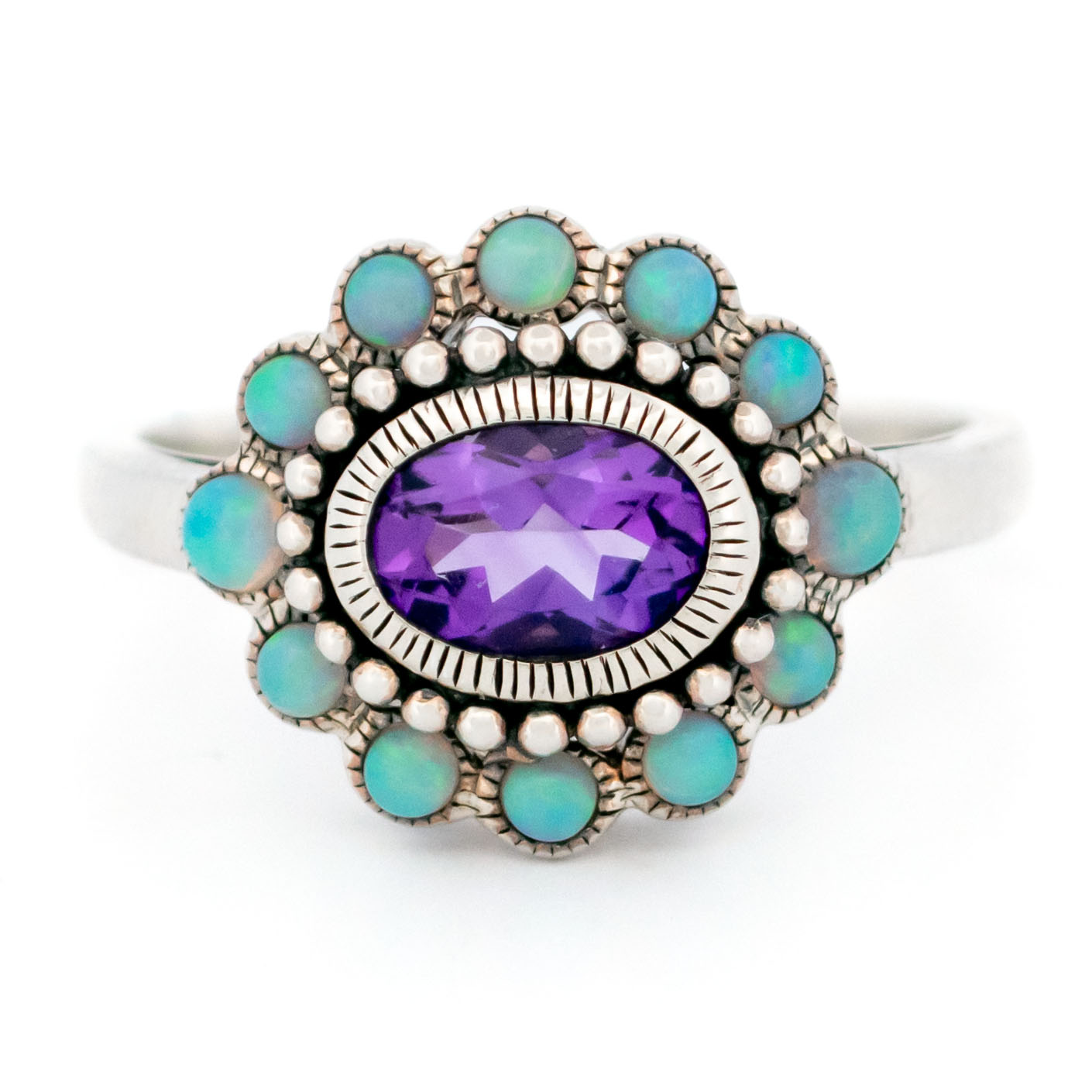
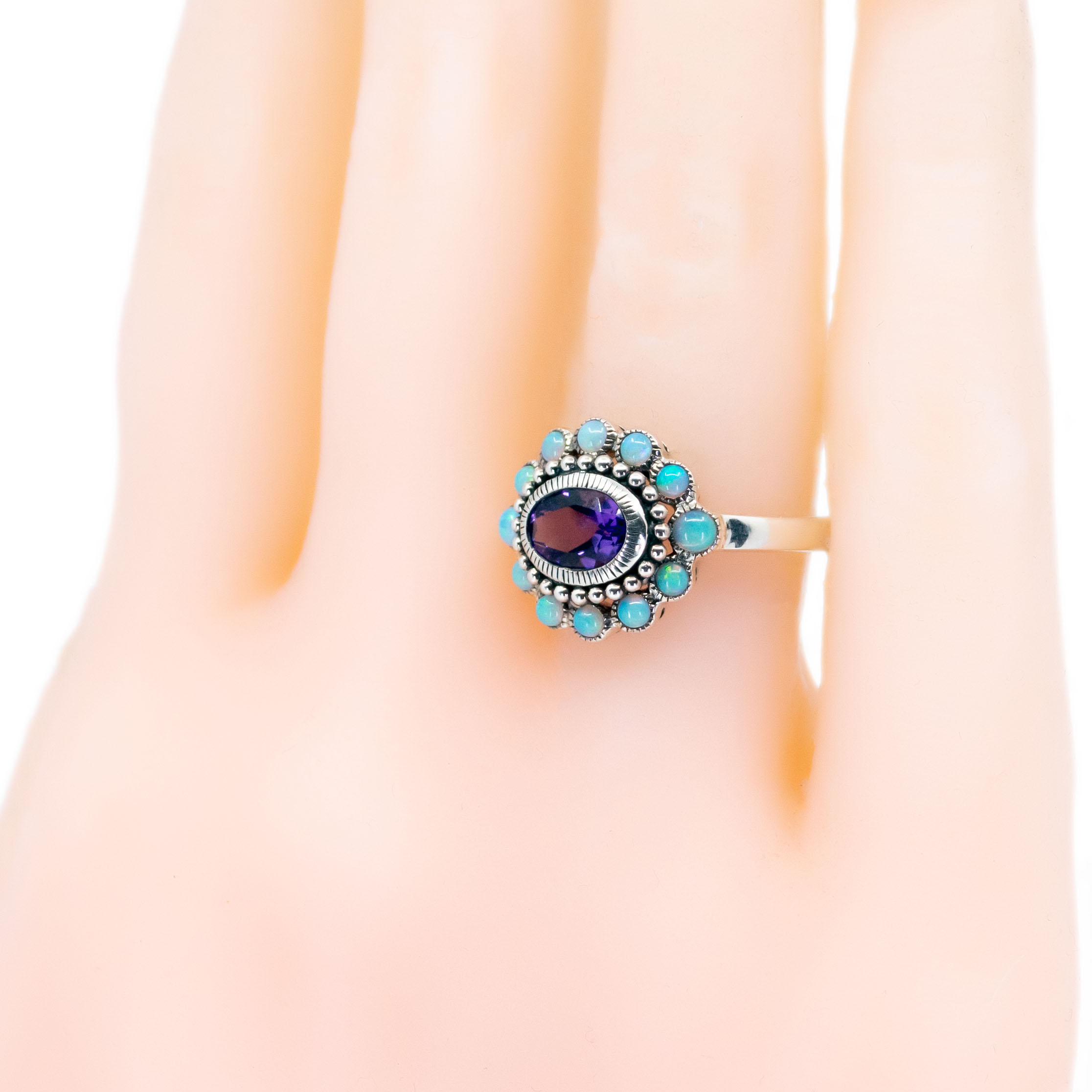
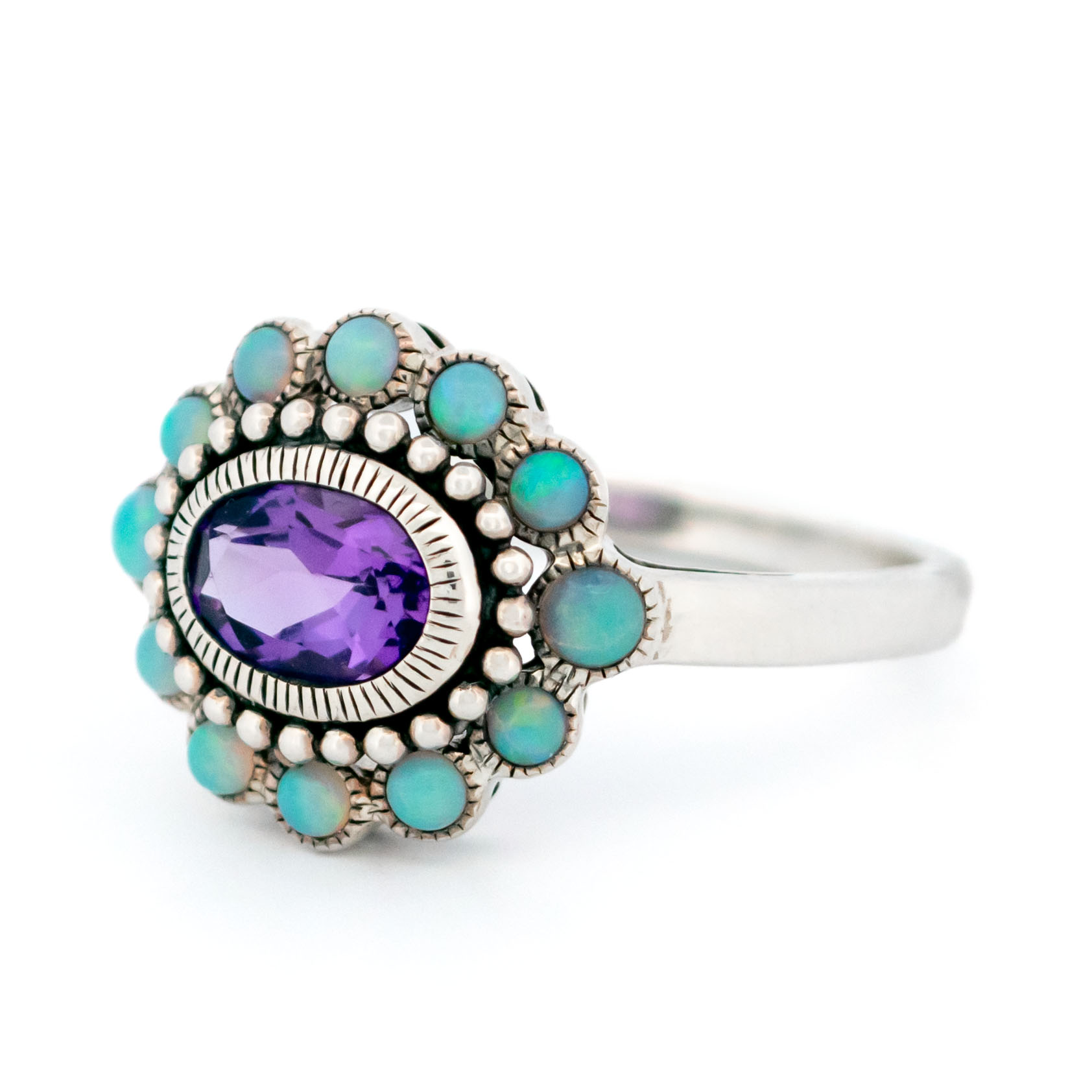
This lovely Victorian-design cluster ring features oval-shaped approx. 0.45ct amethyst and opals, beautifully crafted in 925′ Silver.
Amethyst Opal 925′ Silver Cluster Ring 18232-3375
€ 265,00 VAT incl. (where applicable)
In stock
This lovely Victorian-design cluster ring features oval-shaped approx. 0.45ct amethyst and opals, beautifully crafted in 925′ Silver.
Details: ±0.45ct amethyst, Opals, 925′ Silver Ring
Size: 18.0 NL / 56.25 FR / 7¾ US / P UK, sizeable (within reason).
Weight in grams: 3.4.
Condition: New.
| Design Era | |
|---|---|
| Design & Historical Context | The Victorian Era spanned Queen Victoria's rule of England from 1837 until 1901. During this time, a middle class began to emerge, sparking a demand for jewelry in the mass market, jewelry trends often reflected the tone of current events. The era is usually divided into several subsections: the Romantic Period from 1837 to 1861, the Grand Period from 1861 to 1880, and the Aesthetic Period from 1880 to 1901. During the Romantic Period jewelry also featured nature-inspired designs, similar to jewelry of the Georgian era. Frequently, these designs were delicately and intricately etched into gold. Lockets and brooches were popular in daytime jewelry during the early Victorian era, whereas colored gemstones and diamonds were worn during the evening. During the Grand Period jewelry , because the Grand or Mid-Victorian era corresponded with the death of Queen Victoria's husband, many jewelry pieces have solemn, somber designs. Known as mourning jewelry, the pieces feature heavy, dark stones. Jet, onyx, amethyst, and garnet are frequently found in jewelry from this period. Compared to previous periods, Mid-Victorian-era jewelry features highly creative, colorful designs using shells, mosaics and gemstones. During the Aesthetic period, jewelers used diamonds and feminine, bright gemstones such as sapphire, peridot, and spinel. Star and crescent designs as well as elaborate hat pins were also popular. Some scholars believe the aesthetic era began sooner, in 1875, and ended as early as 1890. |
| Key Materials | |
| Materials & Craftsmanship | amethyst: The Stone of Tranquility and Elegance Amethyst, a striking violet gemstone from the quartz family, is cherished for its vibrant hues, ranging from soft lavender to deep purple. Formed in volcanic rocks and geodes, its rich color comes from iron and trace elements, enhanced by natural radiation over millions of years. Historically, amethyst has been prized by many cultures. The ancient Greeks believed it could prevent intoxication, naming it "amethystos," meaning "not drunk." It was also a symbol of royalty and spirituality, often used in crowns and religious artifacts during the Middle Ages. In modern jewelry, amethyst’s durability (Mohs hardness of 7) and stunning color make it a popular choice for rings, necklaces, and other pieces. Known as the "Stone of Tranquility," it is believed to calm the mind and enhance spiritual clarity. Amethyst is not just a beautiful gemstone; it carries a rich history and symbolism that adds depth to any piece of jewelry, making it a timeless and elegant choice. Opal: The Gem of Fire and Illusion Opal is a gemstone unlike any other, renowned for its mesmerizing play of color that seems to shift and dance with every movement. This captivating stone comes in a variety of colors, from milky whites and soft pinks to deep blacks and fiery reds, all displaying a unique iridescence known as "opalescence." Opal has a rich history and has been prized by many cultures for its mystical qualities. The ancient Romans believed opals brought good luck, while in medieval Europe, they were considered a symbol of hope, purity, and truth. The word "opal" itself is derived from the Greek word "opallios," meaning "to see a change in color," a fitting name for this ever-changing gem. In the world of jewelry, opal is valued for its unique beauty and variety. Though relatively soft, with a Mohs hardness of 5.5 to 6.5, opals are often set in protective settings to preserve their delicate structure. They are used in rings, earrings, pendants, and brooches, where their shifting colors add a dynamic and ethereal quality to each piece. Opal is more than just a gemstone; it is a symbol of creativity, spontaneity, and emotional expression. Its stunning play of color and rich historical background make it a cherished and enchanting choice for jewelry that captures the imagination. 925' Silver: The Metal of Elegance and Versatility Silver, known for its bright, reflective luster, is one of the most beloved and widely used precious metals in the world. This versatile metal has been cherished for thousands of years, not only for its beauty but also for its malleability, making it ideal for crafting intricate and delicate jewelry designs. Historically, silver has been associated with the moon and considered a symbol of purity, clarity, and protection. Ancient civilizations, from the Egyptians to the Greeks and Romans, valued silver for its beauty and used it to create coins, jewelry, and religious artifacts. In many cultures, silver is also believed to have healing properties, often used in amulets and talismans to ward off negative energy. In modern jewelry, silver is prized for its affordability, versatility, and timeless appeal. Sterling silver, an alloy of 92.5% pure silver and 7.5% other metals (usually copper), is the standard used in high-quality jewelry. Its durability and bright, reflective surface make it an excellent choice for a wide range of designs, from minimalist pieces to ornate creations. Silver can be polished to a high shine or given a matte, oxidized, or antiqued finish to suit various styles. Silver is more than just a metal; it is a symbol of elegance, flexibility, and understated luxury. Its enduring popularity and wide-ranging applications make it a staple in jewelry that can complement any look, from casual to formal, with timeless grace. |
| Size | |
| Weight (in grams) | 3.4 |
| Condition |
Enhance the Beauty of Your Jewelry with Proper Care
Wearing your jewelry is a special way to express yourself and add a touch of personal style to any look. However, to ensure your jewelry remains in pristine condition, there are a few simple steps you need to take to keep it looking its best.
General Care Instructions:
Remove jewelry when showering or bathing, especially when at the beach, in the sea or in chlorinated water.
Avoid wearing jewelry while doing physical work such as housekeeping, gardening or exercise.
Storing your jewelry in a dry and cool place will help protect it from moisture, dirt and dust.
Keeping it away from harsh chemicals such as bleach, ammonia and chlorine will help to avoid discoloration and damage.
Cleaning your jewelry regularly with a soft cloth will help to keep it looking shiny and new.
Avoid exposing your jewelry to extreme temperatures, such as leaving it in direct sunlight or near a heater, as this can cause damage.
Handle your jewelry carefully and avoid dropping it, as this can cause the stones to loosen or the metals to scratch.
Finally, if possible, have your jewelry professionally checked and serviced. This will ensure that any potential problems are spotted and fixed before they become worse.
By following these tips, you can enjoy your precious jewelry for many years to come.
Related Products
-
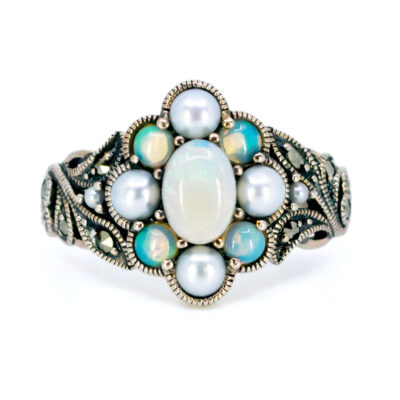
Marcasite (Pyrite) Opal Pearl 925′ Silver Cluster Ring 18208-3356
€ 275,00 VAT incl. (where applicable) -
Marcasite (Pyrite) Opal Pearl Silver Cluster Ring 15389-2139
€ 265,00 VAT incl. (where applicable) -
Marcasite (Pyrite) Pearl Topaz 925′ Silver Cluster Ring 18190-3338
€ 235,00 VAT incl. (where applicable) -
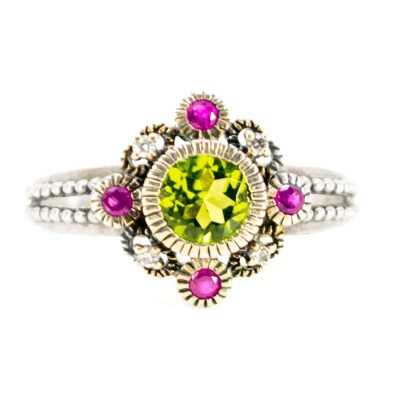
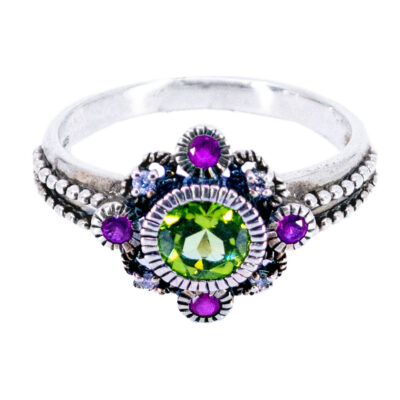
Diamond Peridot Ruby 925′ Silver Cluster Ring 18200-3348
€ 295,00 VAT incl. (where applicable) -
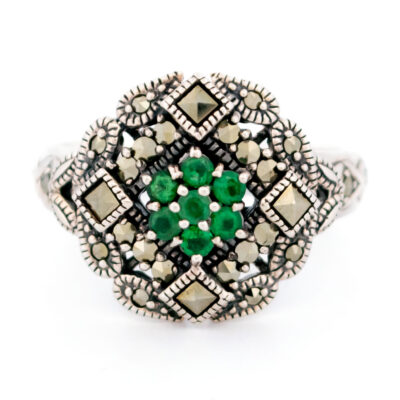
Emerald Marcasite (Pyrite) 925′ Silver Cluster Ring 18210-3358
€ 275,00 VAT incl. (where applicable) -
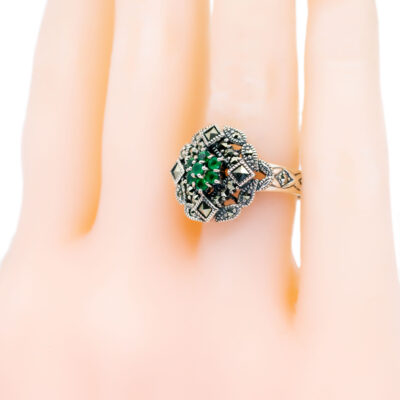
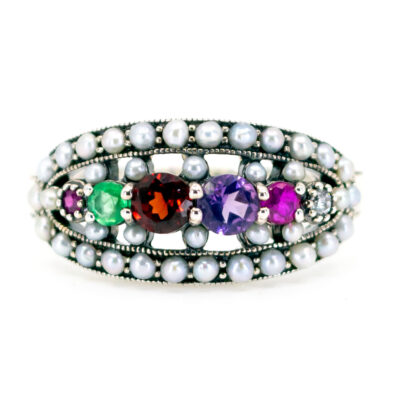
Amethyst Diamond Emerald Garnet Pearl Regard (Multi Gemstone) Ruby 925′ Silver Multi-Gemstone Ring 18227-3374
€ 375,00 VAT incl. (where applicable) -
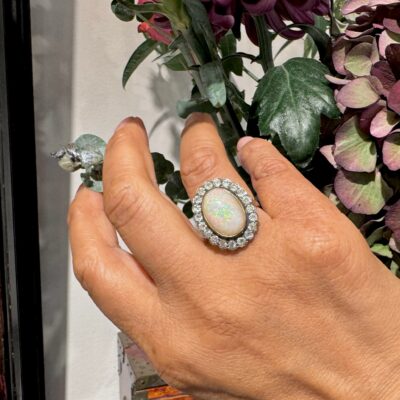
Opal Diamond 14k Silver Cluster Ring 13295-8127
€ 4.695,00 VAT incl. (where applicable) -
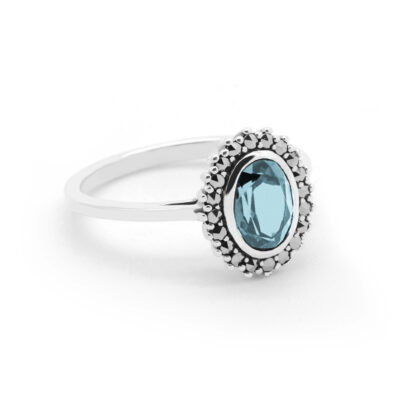
Marcasite (Pyrite) Topaz 925′ Silver Cluster Ring 18400-3463
€ 135,00 VAT incl. (where applicable)





Updating…
Log in
×