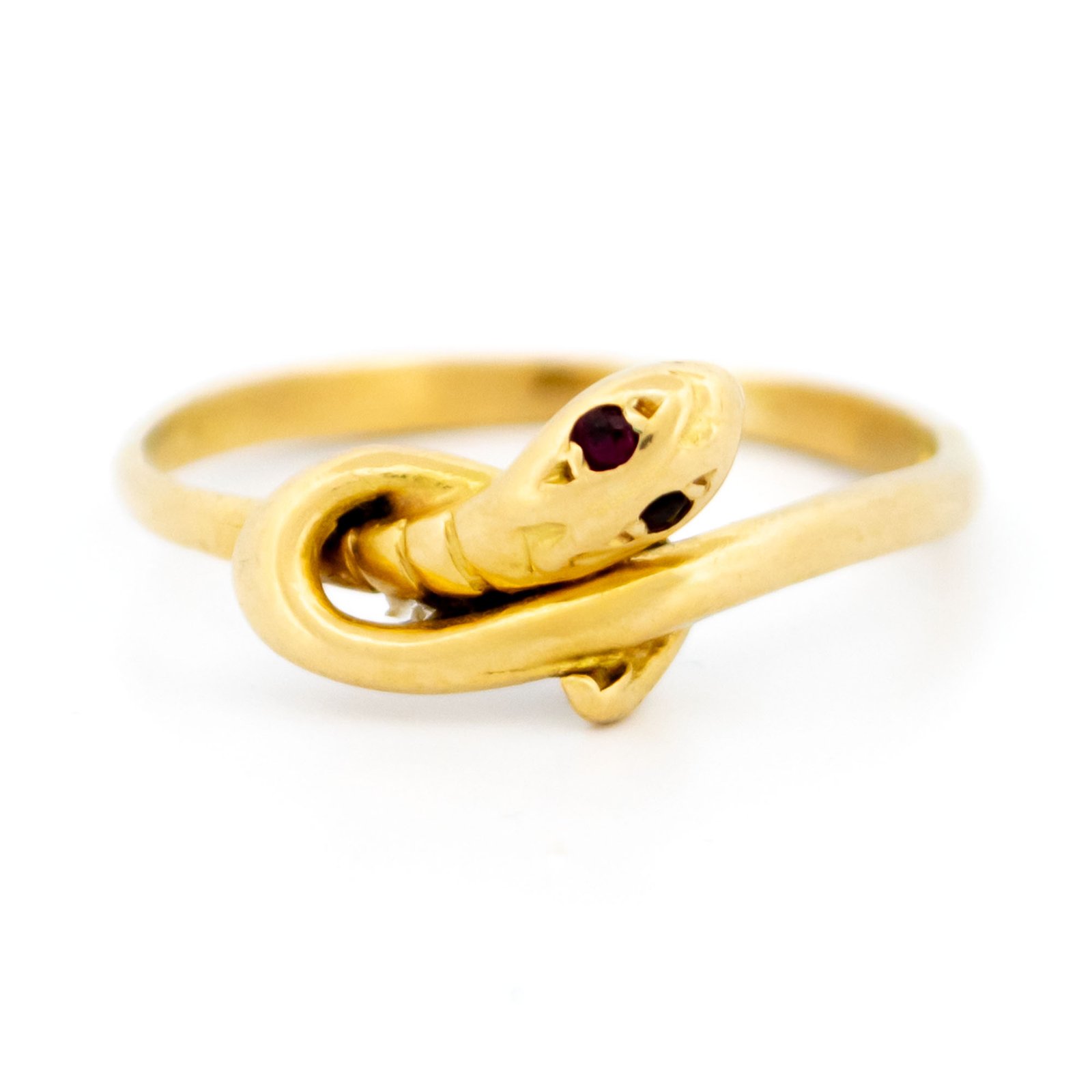
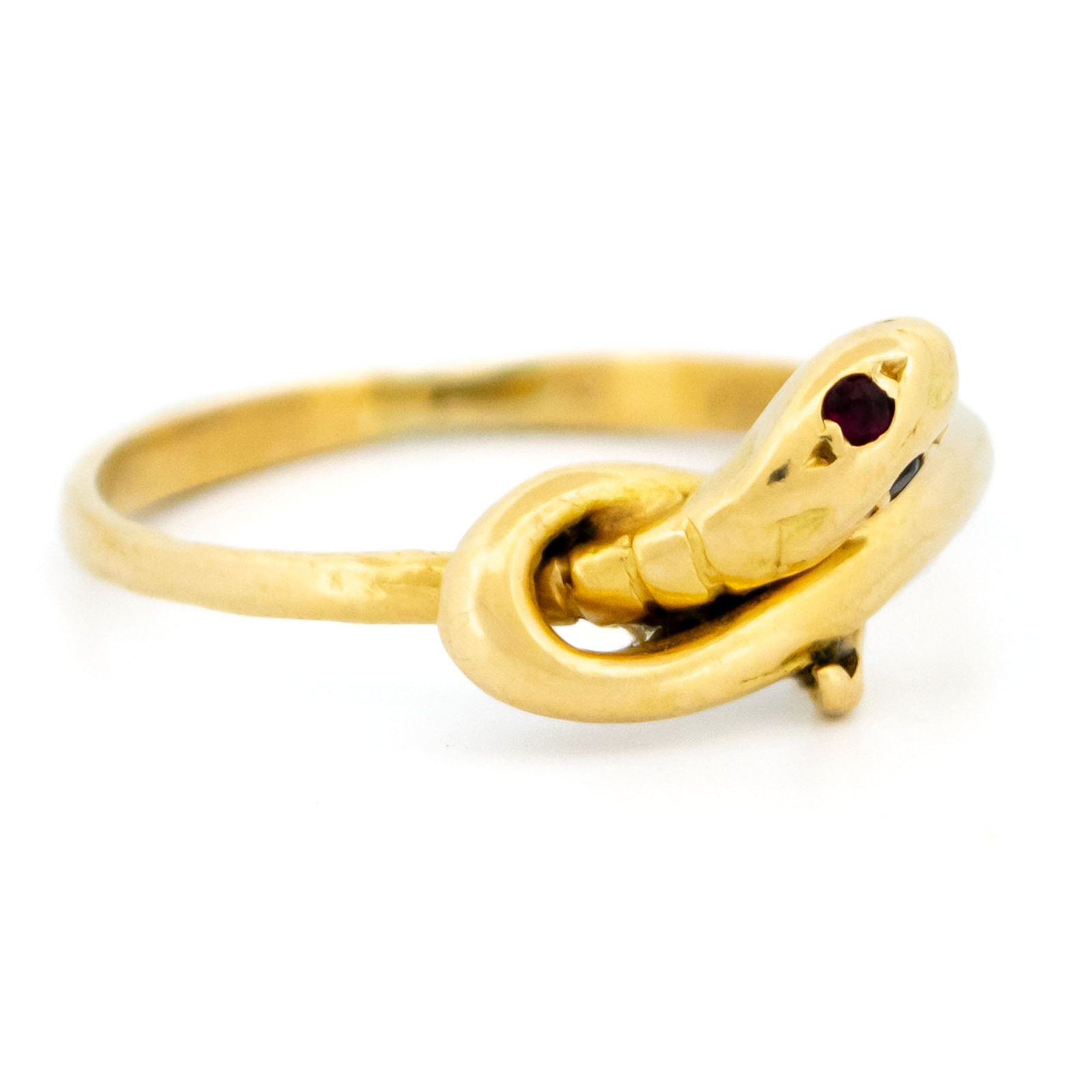
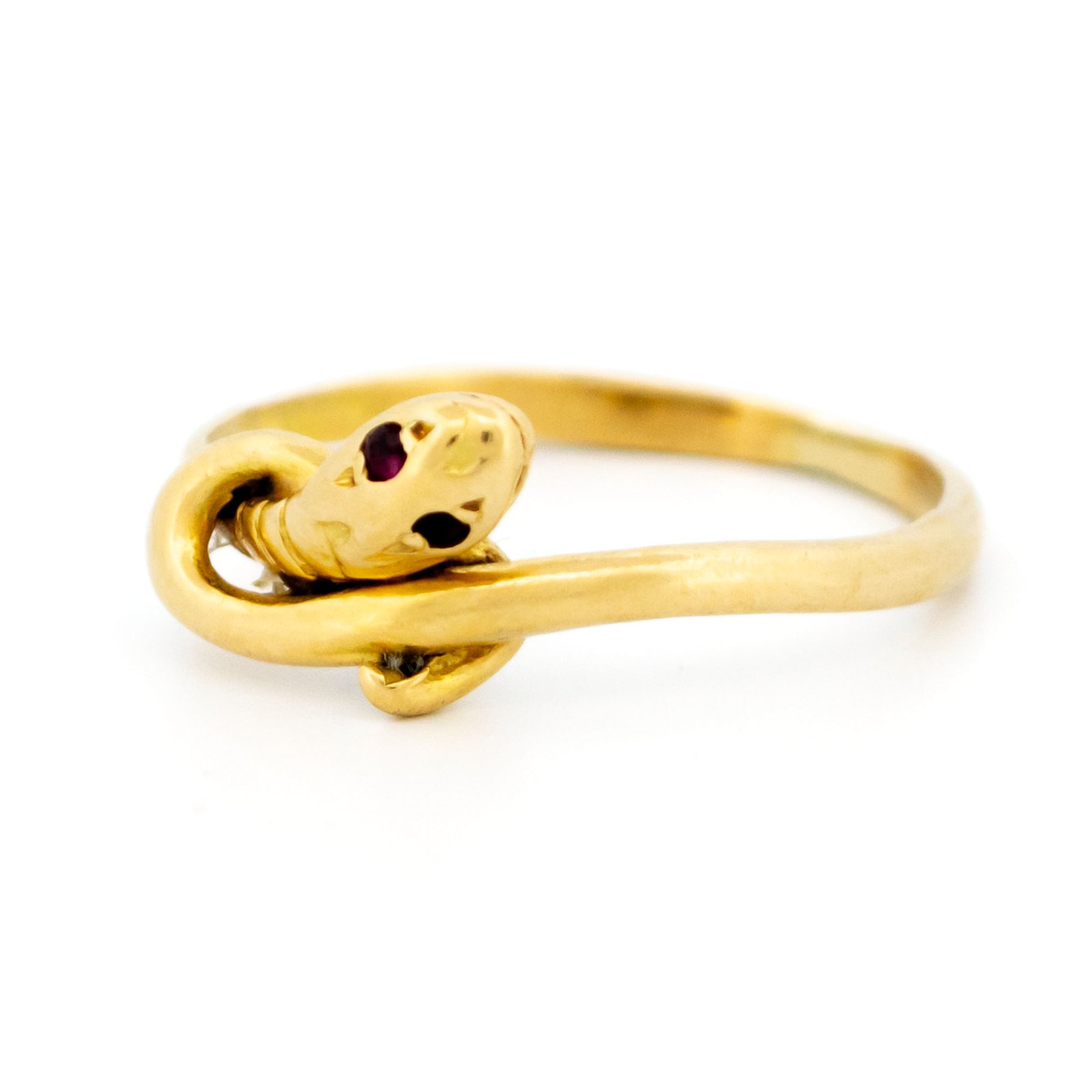
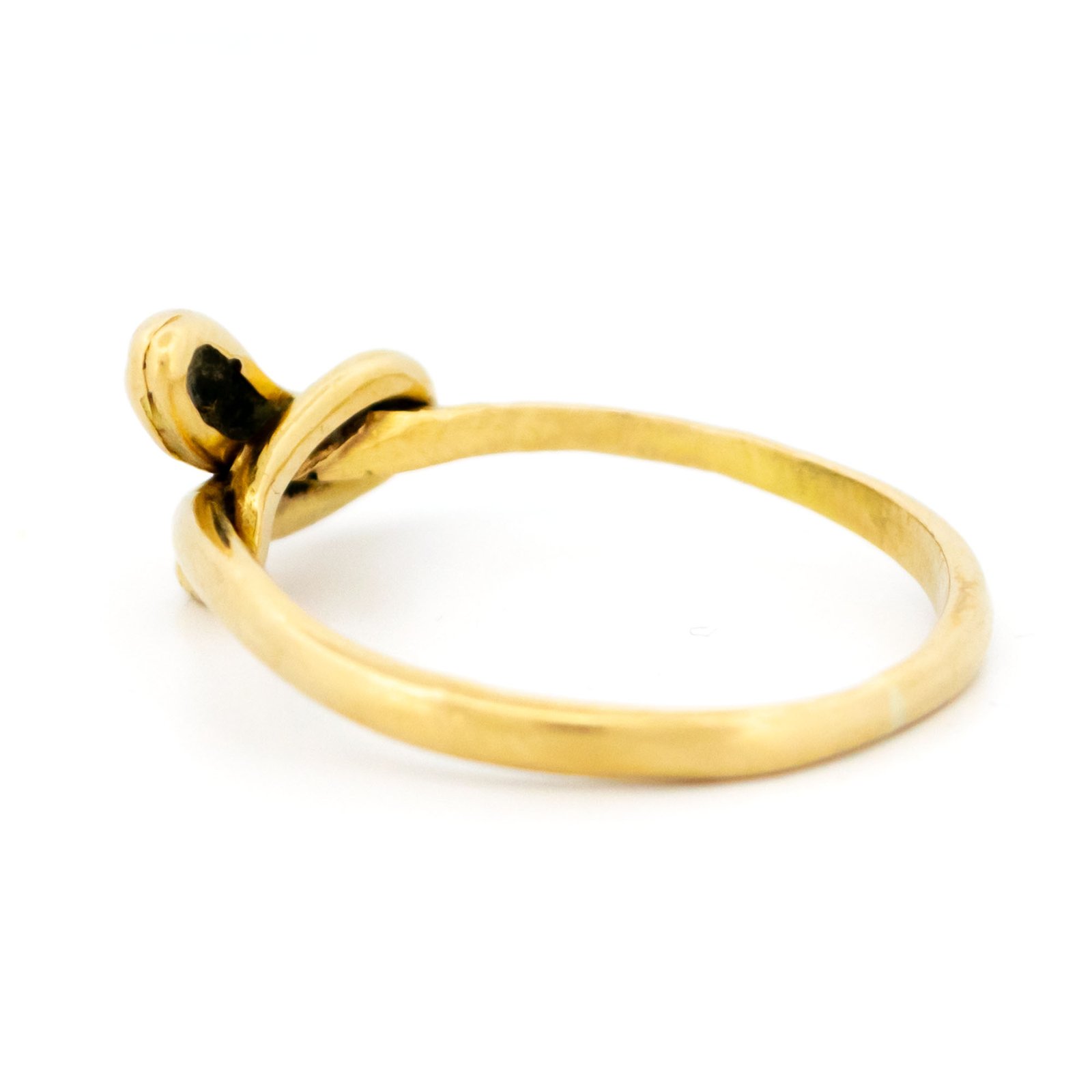
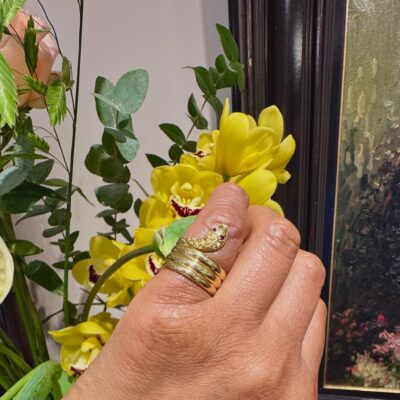
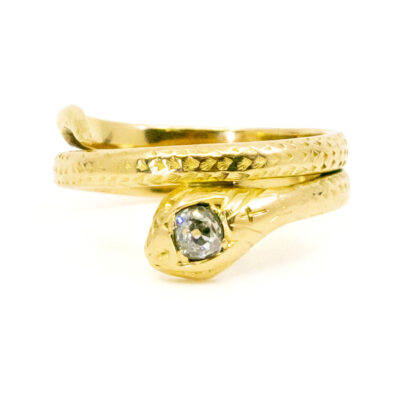
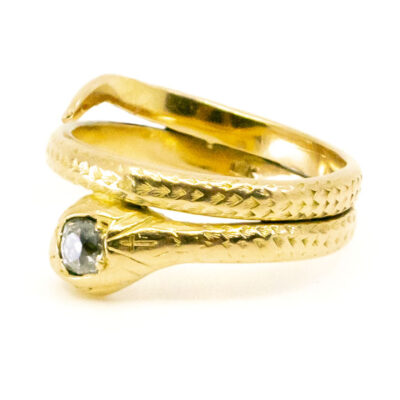
A graceful 18k gold snake ring, its body looping softly around the finger with a fluid, sculptural feel. The head is set with deep red ruby eyes that catch the light with subtle intensity. Crafted in the early 20th century, it carries a quiet vintage charm—refined, tactile, and full of character 🐍✨ Dutch assay mark 750.

Ruby 18k Snake Ring 18607-9596
€ 895,00 VAT incl. (where applicable)
In stock
A graceful 18k gold snake ring, its body looping softly around the finger with a fluid, sculptural feel. The head is set with deep red ruby eyes that catch the light with subtle intensity. Crafted in the early 20th century, it carries a quiet vintage charm—refined, tactile, and full of character 🐍✨ Dutch assay mark 750.
Details: Rubies, 18k Ring, Dutch assay mark 750
Size: 17.5 NL / 55.0 FR / 7¼ US / O UK, sizeable (within reason).
Weight in grams: 2.5.
Condition: Very good condition – slightly used with small signs of wear.
| Design Era | |
|---|---|
| Design & Historical Context | During the 1910s to 1950s, the design of jewelry remained creative and stylish despite being impacted by economic and military events. Jewelry fashions during this time were influenced by various parts of the world, including the Near and Far East, and featured both exotic and geometric patterns that reflected the emergence of the machine age. New York became an important center for fashion along with Paris, and European jewelry companies had the opportunity to sell to and purchase from the Indian subcontinent. Art Deco jewelry, characterized by the use of numerous gemstones, was popular during this time, and the use of gold in jewelry increased in popularity due to its lower cost compared to platinum. Jewelry design also attracted artists and designers from various fields, giving hints about the direction that the industry would take in the future. |
| Key Materials | |
| Materials & Craftsmanship | Ruby: The Gem of Passion and Nobility Ruby, with its fiery red color, is one of the most coveted gemstones in the world, symbolizing passion, power, and nobility. This precious gem belongs to the corundum family, with its striking red hue derived from trace amounts of chromium. Rubies can range in color from deep crimson to vibrant red, often referred to as "pigeon’s blood," the most prized shade. Throughout history, rubies have been revered as symbols of wealth and power. In ancient India, they were called the "king of gemstones" and were believed to protect warriors in battle. In medieval Europe, rubies were thought to bring good fortune, enhance love, and maintain health. Royals and aristocrats adorned themselves with rubies to signify their status and strength. In modern jewelry, rubies are celebrated for their durability and brilliance, with a Mohs hardness of 9, second only to diamonds. This makes them ideal for rings, necklaces, earrings, and other pieces designed for everyday wear. Rubies are often set in gold or platinum, where their vibrant color is showcased to its full potential, adding a touch of luxury and elegance to any design. Ruby is more than just a gemstone; it is a symbol of intense emotion, passion, and enduring strength. Its rich color and historical significance make it a timeless and powerful choice for jewelry that speaks of love, courage, and grandeur. 18k: The Perfect Balance of Luxury and Durability 18k gold is a luxurious and highly sought-after material in the world of fine jewelry, known for its rich color, durability, and value. The "18k" refers to the purity of the gold, indicating that it is composed of 75% pure gold and 25% alloyed metals, such as copper, silver, or palladium. This combination provides the perfect balance between the softness of pure gold and the strength needed for creating durable jewelry. Historically, gold has been prized for its beauty and rarity, symbolizing wealth, power, and status across various cultures and civilizations. 18k gold has been a preferred choice in fine jewelry for centuries due to its ideal blend of purity and strength, offering a radiant gold color that is more vibrant than lower karat golds while still being hard enough for everyday wear. In modern jewelry, 18k gold is favored for its versatility and its ability to enhance the appearance of gemstones. It is available in several colors, including yellow, white, and rose gold, depending on the metals used in the alloy. Each color has its unique appeal: Yellow Gold: The classic choice, offering a warm, rich hue that pairs beautifully with a wide range of gemstones and complements all skin tones. White Gold: A sleek, modern option that resembles platinum or silver but with the strength and luxury of gold. It is often rhodium-plated to enhance its reflective surface. Rose Gold: A romantic, pinkish hue that has gained popularity for its vintage charm and contemporary appeal, achieved by alloying gold with copper. 18k gold is commonly used in engagement rings, wedding bands, earrings, necklaces, and bracelets, where its balance of durability and beauty makes it ideal for both intricate designs and simple, elegant pieces. The alloy's added strength ensures that jewelry can withstand daily wear while maintaining its luster and shape. 18k gold is more than just a material; it is a symbol of refined taste and enduring value. Its perfect blend of luxury and practicality makes 18k gold a timeless choice for those who seek the beauty of high-purity gold without sacrificing durability. Whether in classic or modern designs, 18k gold jewelry offers a radiant and lasting expression of elegance and sophistication. |
| Size | |
| Weight (in grams) | 2.5 |
| Condition | Very good condition – slightly used with small signs of wear |
Enhance the Beauty of Your Jewelry with Proper Care
Wearing your jewelry is a special way to express yourself and add a touch of personal style to any look. However, to ensure your jewelry remains in pristine condition, there are a few simple steps you need to take to keep it looking its best.
General Care Instructions:
Remove jewelry when showering or bathing, especially when at the beach, in the sea or in chlorinated water.
Avoid wearing jewelry while doing physical work such as housekeeping, gardening or exercise.
Storing your jewelry in a dry and cool place will help protect it from moisture, dirt and dust.
Keeping it away from harsh chemicals such as bleach, ammonia and chlorine will help to avoid discoloration and damage.
Cleaning your jewelry regularly with a soft cloth will help to keep it looking shiny and new.
Avoid exposing your jewelry to extreme temperatures, such as leaving it in direct sunlight or near a heater, as this can cause damage.
Handle your jewelry carefully and avoid dropping it, as this can cause the stones to loosen or the metals to scratch.
Finally, if possible, have your jewelry professionally checked and serviced. This will ensure that any potential problems are spotted and fixed before they become worse.
By following these tips, you can enjoy your precious jewelry for many years to come.
Related Products
-
Ruby 18k Snake Ring 17071-9107
€ 2.295,00 VAT incl. (where applicable) -
Diamond Ruby 14k Navette-Shape Ring 16912-9014
€ 1.495,00 VAT incl. (where applicable) -
Diamond Ruby 18k Trilogy Ring 17994-5227
€ 2.895,00 VAT incl. (where applicable) -
Ruby 14k Cluster Ring 18596-9585
€ 1.495,00 VAT incl. (where applicable) -
Ruby 18k Half-Eternity Ring 9998-0152
€ 1.295,00 VAT incl. (where applicable) -
Diamond Ruby 14k Cluster Ring 18369-9491
€ 1.695,00 VAT incl. (where applicable) -
Diamond 14k Snake Ring 8608-2085
€ 2.895,00 VAT incl. (where applicable) -
Diamond Ruby 14k Antique Ring 10887-6800
€ 1.795,00 VAT incl. (where applicable)



Updating…
Log in
×