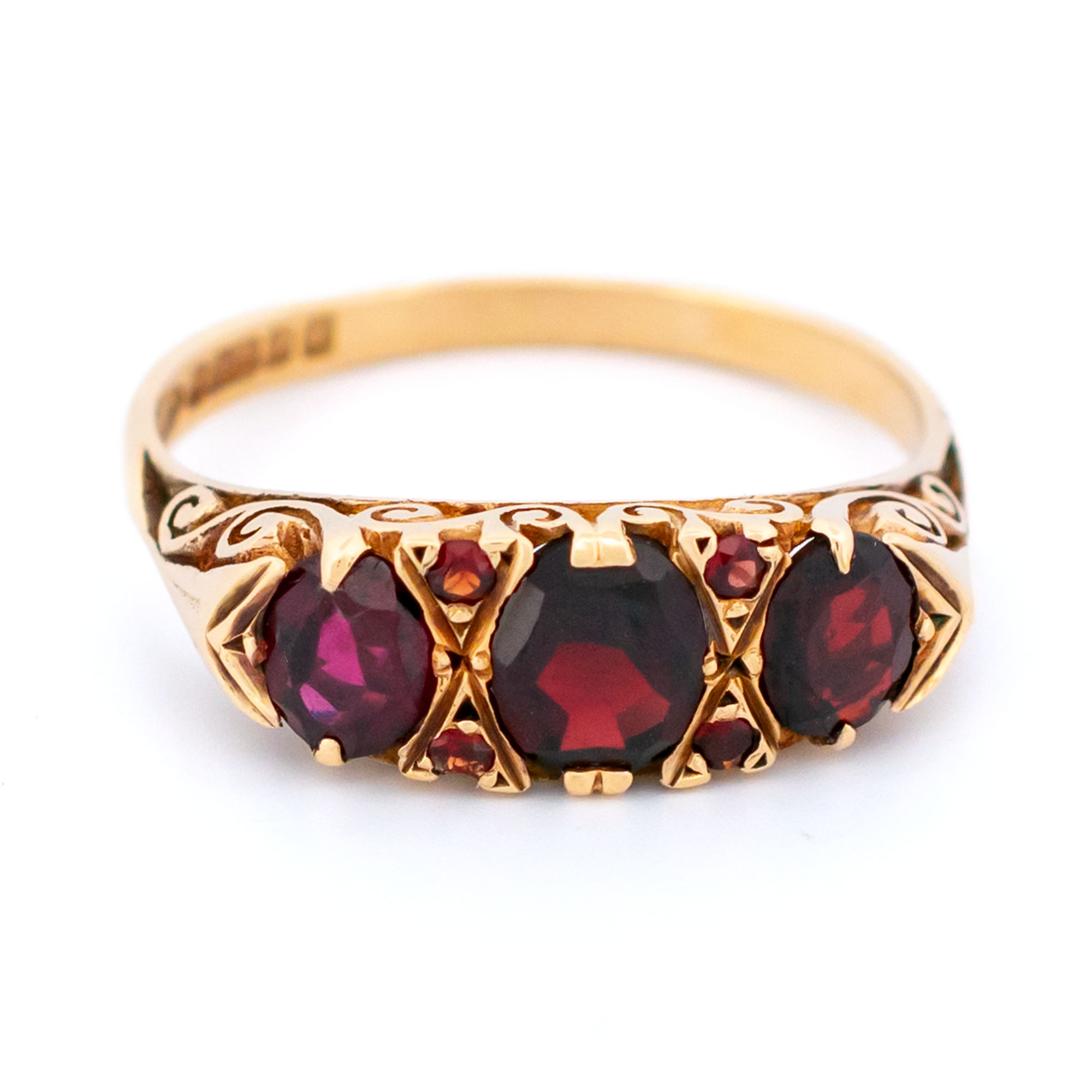
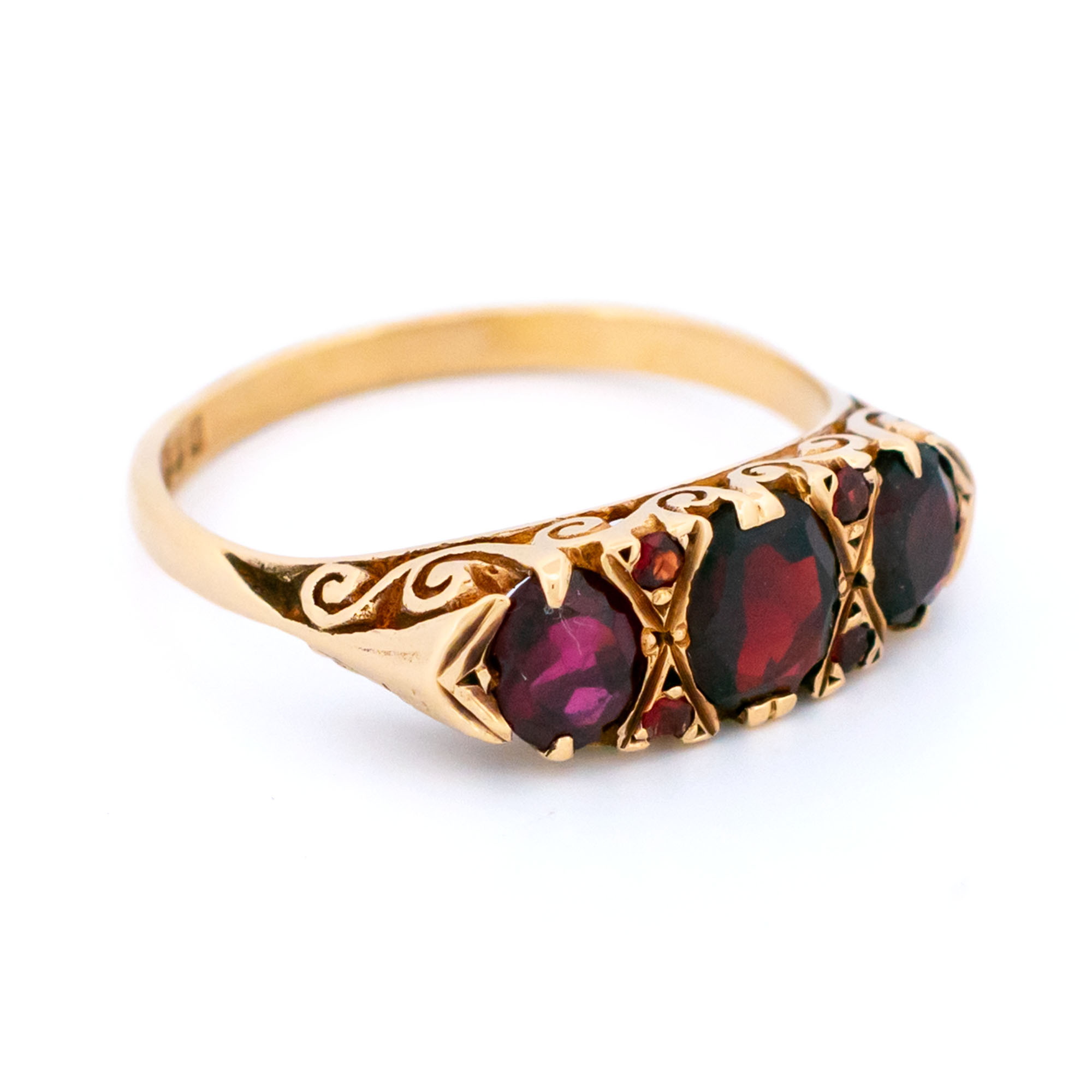
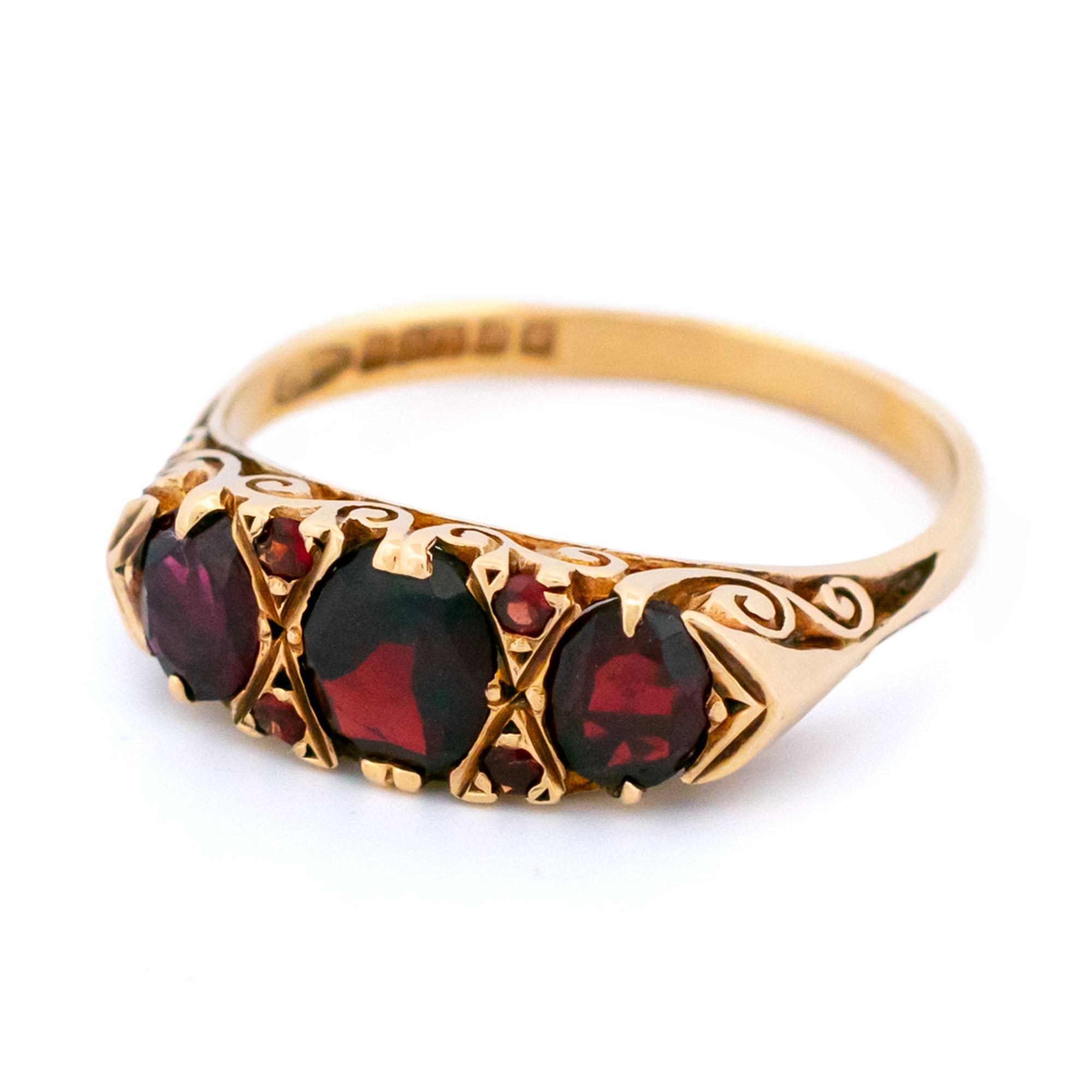
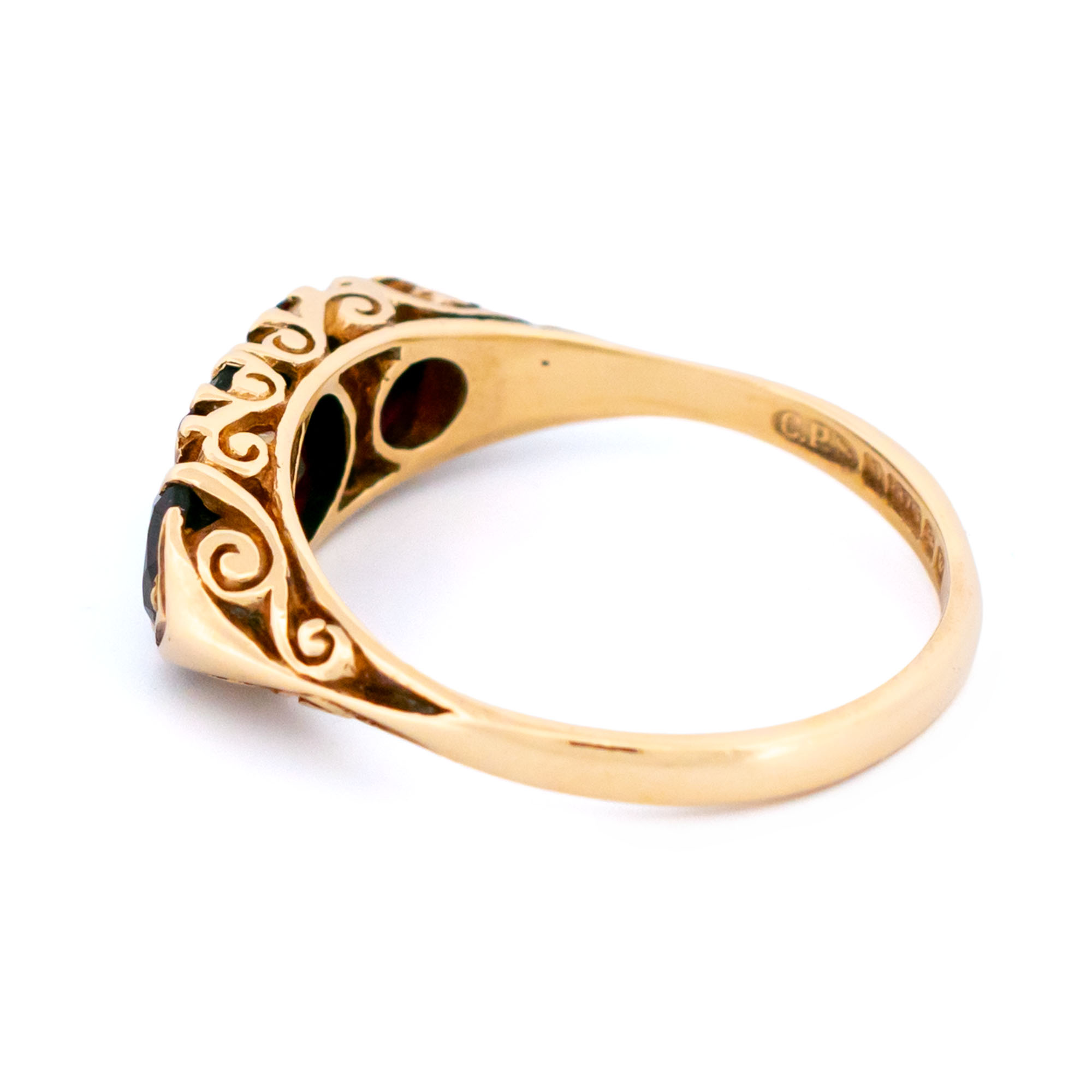
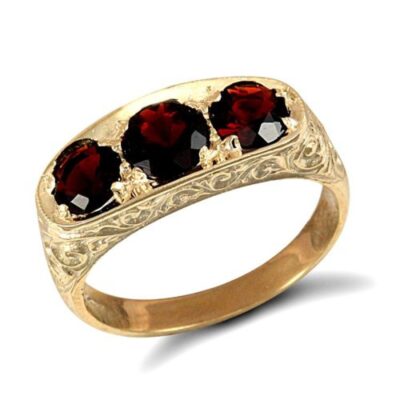
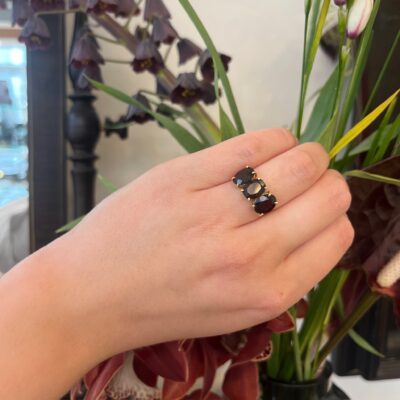
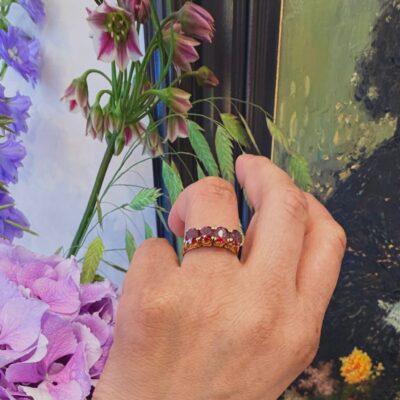
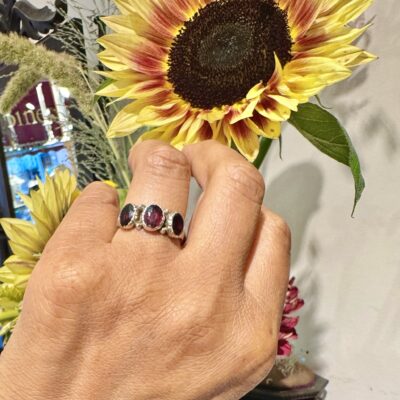
Rich in Victorian-inspired charm, this vintage trilogy ring showcases approximately 2.50ct of deep wine-red garnets set in warm 9k yellow gold. Delicate scrollwork and ornate detailing frame the three-stone design, creating a beautifully balanced silhouette. Crafted by C.P.S. Jewellery Co. Ltd., Birmingham, in 1971, this elegant piece captures the romance of antique jewelry with timeless appeal.

Garnet 9k Trilogy Ring 19126-9715
€ 995,00 VAT incl. (where applicable)
In stock
Rich in Victorian-inspired charm, this vintage trilogy ring showcases approximately 2.50ct of deep wine-red garnets set in warm 9k yellow gold. Delicate scrollwork and ornate detailing frame the three-stone design, creating a beautifully balanced silhouette. Crafted by C.P.S. Jewellery Co. Ltd., Birmingham, in 1971, this elegant piece captures the romance of antique jewelry with timeless appeal.
Details: ±2.50ct Garnets, 9k Ring
Size: 18.25 NL / 57.0 FR / 8 US / P½ UK, sizeable (within reason).
Weight in grams: 3.
Condition: Very good condition – slightly used with small signs of wear.
| Design Era | |
|---|---|
| Design & Historical Context | The Victorian Era was a time of great cultural and artistic flourishing in England, and this was reflected in the jewelry of the time. During the Victorian Era, a middle class began to emerge, which sparked a demand for jewelry in the mass market. Jewelry trends during this time often reflected the tone of current events. The Victorian Era is usually divided into three subsections: the Romantic Period (1837-1861), the Grand Period (1861-1880), and the Aesthetic Period (1880-1901). During the Romantic Period, jewelry featured nature-inspired designs similar to those of the Georgian era, and was characterized by its intricate and delicate detailing. Lockets and brooches were popular for daytime wear, while colored gemstones and diamonds were worn in the evening. During the Grand Period, known as the Mid-Victorian era, jewelry was often influenced by the death of Queen Victoria's husband. Many jewelry pieces from this period have solemn, somber designs and feature heavy, dark stones such as jet, onyx, amethyst, and garnet. This period also saw the emergence of highly creative, colorful designs using shells, mosaics, and gemstones. During the Aesthetic Period, jewelers used diamonds and feminine, bright gemstones such as sapphire, peridot, and spinel. Star and crescent designs, as well as elaborate hat pins, were also popular. Some scholars believe that the Aesthetic Period began earlier, in 1875, and ended as early as 1890. |
| Key Materials | |
| Materials & Craftsmanship | Garnet: The Stone of Passion and Protection Garnet, renowned for its deep red hue, is a gemstone that symbolizes passion, energy, and protection. Though commonly associated with its rich red color, garnet actually comes in a variety of shades, including green, orange, and even rare blue, making it a versatile and intriguing gemstone. Garnet has a long history of use, dating back to ancient Egypt, where it was worn by pharaohs as a symbol of life and power. In Roman times, garnets were often set into signet rings used to stamp wax seals on important documents. The stone was also believed to offer protection to travelers and warriors, warding off harm and ensuring safe journeys. In jewelry, garnet’s durability, with a Mohs hardness of 6.5 to 7.5, and its striking color make it a popular choice for rings, necklaces, and earrings. Its ability to capture and reflect light with a warm, fiery glow adds a touch of drama and sophistication to any piece. Garnet is more than just a gemstone; it is a symbol of enduring passion and strength. Its vibrant energy and historical significance make it a timeless and powerful choice for jewelry that stands out and tells a story. 9k: The Affordable and Durable Choice with a Subtle Golden Hue 9k gold is a cost-effective and sturdy option in the world of fine jewelry, particularly popular for those seeking the look of gold at a more accessible price point. The "9k" indicates that the gold is composed of 37.5% pure gold, with the remaining 62.5% made up of alloyed metals such as copper, silver, nickel, or zinc. This higher proportion of alloyed metals results in a more durable and harder material, making 9k gold an excellent choice for everyday wear. Historically, 9k gold has been favored in regions like the United Kingdom and Australia, where it is legally recognized as gold. It offers a balance between the luxury of gold and the practicality of more affordable metals, making it accessible to a wider range of people. In modern jewelry, 9k gold is appreciated for its durability and subtle color. While its gold content is lower than that of 14k or 18k gold, it still retains a warm, golden hue, though it is slightly paler. The color of 9k gold can vary depending on the metals used in the alloy: Yellow Gold: 9k yellow gold has a softer, more subdued golden color compared to higher karat golds, but it still carries the classic warmth and appeal of gold. White Gold: 9k white gold has a faint golden tint beneath its white finish, which is often enhanced with a rhodium plating to give it a brighter, more silvery appearance. Rose Gold: 9k rose gold, made by adding more copper to the alloy, has a delicate pinkish hue that is slightly more muted than higher karat rose golds but still carries a romantic charm. 9k gold is commonly used in rings, earrings, bracelets, pendants, and other jewelry that is designed for daily wear. Its increased durability means it is less prone to scratching and bending, making it a practical choice for pieces that are worn regularly. 9k gold is more than just an affordable alternative; it is a symbol of practical luxury and everyday elegance. Its durability, combined with its subtle and warm color, makes 9k gold a popular choice for those who want the beauty of gold with the added benefit of strength and affordability. Whether in a simple design or an intricate piece, 9k gold offers a lasting and attractive option for jewelry that can be cherished daily. |
| Size | |
| Weight (in grams) | 3 |
| Condition | Very good condition – slightly used with small signs of wear |
Enhance the Beauty of Your Jewelry with Proper Care
Wearing your jewelry is a special way to express yourself and add a touch of personal style to any look. However, to ensure your jewelry remains in pristine condition, there are a few simple steps you need to take to keep it looking its best.
General Care Instructions:
Remove jewelry when showering or bathing, especially when at the beach, in the sea or in chlorinated water.
Avoid wearing jewelry while doing physical work such as housekeeping, gardening or exercise.
Storing your jewelry in a dry and cool place will help protect it from moisture, dirt and dust.
Keeping it away from harsh chemicals such as bleach, ammonia and chlorine will help to avoid discoloration and damage.
Cleaning your jewelry regularly with a soft cloth will help to keep it looking shiny and new.
Avoid exposing your jewelry to extreme temperatures, such as leaving it in direct sunlight or near a heater, as this can cause damage.
Handle your jewelry carefully and avoid dropping it, as this can cause the stones to loosen or the metals to scratch.
Finally, if possible, have your jewelry professionally checked and serviced. This will ensure that any potential problems are spotted and fixed before they become worse.
By following these tips, you can enjoy your precious jewelry for many years to come.
Related Products
-
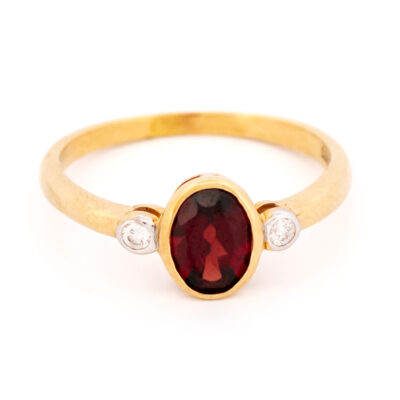
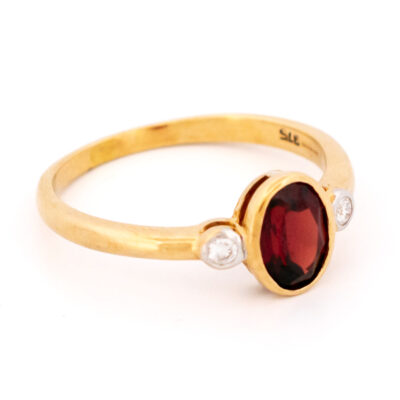
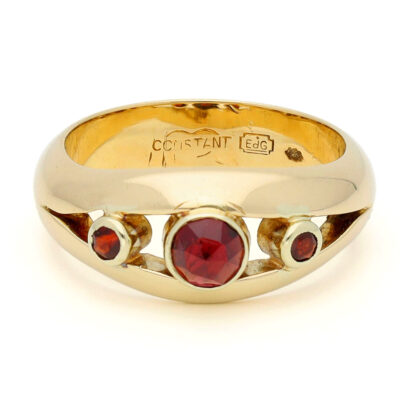
Garnet 9k Trilogy Ring 16031-8713
Original price was: € 1.295,00.€ 1.000,00Current price is: € 1.000,00. VAT incl. (where applicable) -
Diamond Garnet 9k Trilogy Ring 18114-9458
€ 1.295,00 VAT incl. (where applicable) -
Garnet 14k Trilogy Ring 18448-9517
€ 1.695,00 VAT incl. (where applicable) -
Garnet 18k Trilogy Ring 17477-9204
€ 1.895,00 VAT incl. (where applicable) -
14k Diamond Garnet Cluster Ring 19179-9741
€ 3.295,00 VAT incl. (where applicable) -
Garnet 20k Row Ring 18128-9468
€ 1.895,00 VAT incl. (where applicable) -
Garnet 9k Trilogy Ring 16410-8842
€ 1.595,00 VAT incl. (where applicable) -
Diamond 14k Trilogy Ring 19050-9681
€ 995,00 VAT incl. (where applicable)



Updating…
Log in
×